Buying a Home in 2025? Here’s What to Know About New Builds vs. Resale in the GTA

🔍 Thinking about buying in the GTA this year? Whether you’re upgrading, investing, or stepping into your first home, here’s a breakdown to help you move with clarity and confidence.
Deciding between a shiny new build or a resale home in the Greater Toronto Area (GTA) is no small feat. It’s a choice that keeps many homebuyers up at night—scrolling through listings, weighing the pros and cons. 🌓 Both paths have their perks and pitfalls, and the right one depends on your budget, lifestyle, and what you're looking for in a home.
As someone who’s helped hundreds of families navigate this exact decision, I wanted to share some real, on-the-ground perspective. This article builds upon a blog I wrote earlier at Elixir Real Estate (New vs Existing), now updated with fresh insights from 2025.
🔍 What’s the Difference?
A new build is a brand-new home, straight from the builder. Think: modern layouts, fresh paint, energy-efficient features—and you often get to pick your flooring, countertops, and kitchen hardware. 🛠️ Builders typically allow you to choose your finishes, like flooring, kitchen counters, bathroom fixtures, and cabinet hardware.
Resale homes, meanwhile, are previously lived-in. They might be a charming 70s bungalow with a 60-ft lot or a 90s suburban gem—each with its quirks, character, and a story to tell.
📉 The GTA Market in 2025
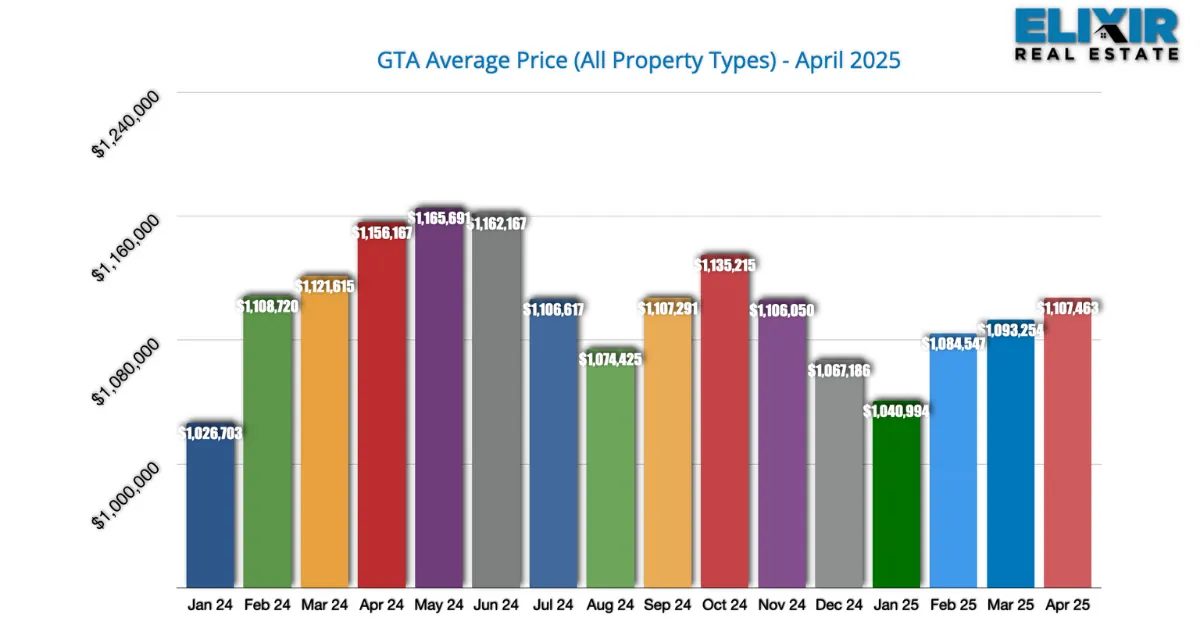
As of April 2025, buyers are getting a bit of breathing room. 🧘♂️ The average home price is $1,107,463, down 4.1% year-over-year. Listings are climbing—18,836 hit the market in April alone (a 29-year high)—but sales are down 23% versus April 2024.
Buyers are cautious amid economic uncertainty, interest rate speculation, and shifting trade policy talk. The silver lining? More choice. More room to negotiate. 💬
🏗️ Why You Might Choose a New Build
✅ Move-In Ready Vibes – Modern layouts, smart tech, and energy-efficient systems like high-efficiency furnaces and triple-glazed windows.
✅ Less Fix-Up Stress – Everything’s new, so you’re not likely to deal with a leaky roof or creaky furnace right away. Most come with warranties, giving you peace of mind.
✅ Future Growth Potential – Buying in an up-and-coming area like Caledon, Pickering, Whitby, or Milton could mean appreciation as the neighborhood develops. 🌱
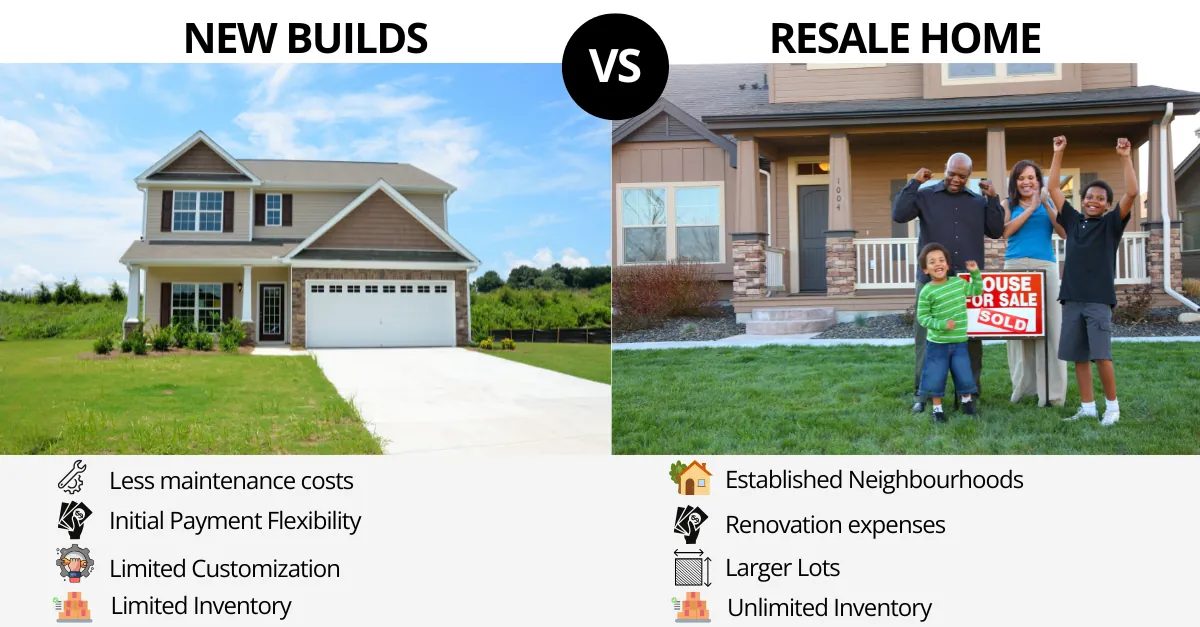
✅ Payment Flexibility – Builders often let you spread out deposits over several months or even years. Typically, payment duration ranges from 6 months to 2 years depending on the project—shorter for low-rise subdivisions and longer for high-rise condos.
⚠️ The Downsides:
💸 Sticker Extras – That $500,000 home? Add 13% HST—an additional $65,000. HST is typically built into the price, making these homes appear more expensive.
🌍 Outer Locations – Many new developments are located on the outskirts or municipal borders, which may lack established transit and schools during the initial phase. Exceptions include high-rise projects where rezoning allows dense builds downtown.
🕒 Delivery Uncertainties – Delays are common, and if market conditions change before closing, banks may not appraise at your purchase price. For example, during COVID, delays stretched over a year, and interest rate hikes hit pre-construction buyers hard.
🔹 Limited Inventory – There is a finite and limited number of lots/floor plans available for you to choose from and decide, need to be visualized in mind as the property not ready yet.
🏡 Why Resale Homes Still Win Over Many Buyers
✅ Established Character – Tree-lined streets, great schools, convenient access, and community feel. There are established transit hubs, libraries, parks, recreation centres etc in an established subdivision.
✅ Price Variety – Buyers have more inventory and better control over choosing within their budget. Based on the amount allocated for the purchase, they can choose the home which strikes a balance between the equity growth, livability and which is pocket friendly as well.
✅ Unique Features – Larger lots, character details, and mature landscaping. As we go in the past, the land was not that scarce and lots were by design wider and deeper too. This gives a good breathability to the entire subdivision and everything is elegantly separated and is less dense.
✅ Less Uncertainty – Shorter closing periods (typically 6–12 weeks) provide better financial control and fewer surprises. 🔑
✅ Unlimited Inventory – The resale market boasts an endless supply of homes, with new properties continuously becoming available each week. This allows buyers to personally experience a home and its neighborhood before committing. This vast inventory is a significant advantage, especially for those seeking specific features like a ravine-backing lot, a particular school zone, or a specific subdivision etc.
⚠️ The Catch:
🧰 Higher Maintenance – Outdated systems may need repairs, like electrical panels, roof shingles, or furnaces, windows might need an overhaul or replacements.
🛠️ Renovation Costs – Love the layout but not the finishes? Modernizing a resale can be costly specially with the current prices and inflation rates.
💵 Unknowns – Budget for surprises. Even with a good inspection, things like roofing or insulation, or water-proofing the basement etc may need attention.
📊 Money Matters in 2025
With so many listings, sellers are motivated. Resales are sitting a median of 22 days based on April's TRREB MLS sales data, which gives buyers negotiation room. New builds stick to price lists, though upgrades are often thrown in to close the deal. 🧾
Mortgage rates as of May 29, 2025, are around 4% (5-year fixed in Toronto). This makes both options more affordable—but resale homes come with maintenance, while new builds hit you with taxes and closing costs.
🤔 What’s Your Lifestyle?
🧑💼 First-Time Buyers – Resale condos offer affordability. New builds appeal to young professionals looking for sleek designs. Specially, in the current market, condo properties are available with lot of inventory and price benefit for the buyers.
👨👩👧👦 Families – Resale wins on location, amenities, and established communities. New builds offer customization opportunity and growth potential once neighbourhood is established.
💼 Investors – Resales can generate immediate income. New builds offer appreciation over time and the initial contribution is blocked till the time completion happens.
📌 How to Decide
1. Assess Your Budget – Know your number. It helps guide every other choice. This is the first and foremost step we should do for a Real Estate purchase, both for living or as an investment.
2. Evaluate Location Needs – Commute, schools, and lifestyle all play a role. For enjoying the home and area benefits, it has be in a reasonable commuting distance.
3. Consider Timeline – Need to move soon? Go resale. Have time? Pre-construction can also be considered.
4. Talk to a Pro – Once you’ve got your budget decided, consult a realtor to align it with real options.
🔑 Bottom Line
There’s no one-size-fits-all answer. Some buyers fall in love with being the first to live in a home. Others crave the warmth and roots of an established neighbourhood. 🏘️
Be honest about your priorities—and get guidance from someone who’s seen both sides, many times.
📞 If you’re trying to decide, I’d love to talk. We’ve helped over 650 plus families across the GTA. Sometimes it’s a modern new build. Sometimes it’s a charming classic. Either way, it’s always about what’s right for you.
Let’s make the right call together.