
7 Timeless Lessons from 22 Years of GTA Real Estate


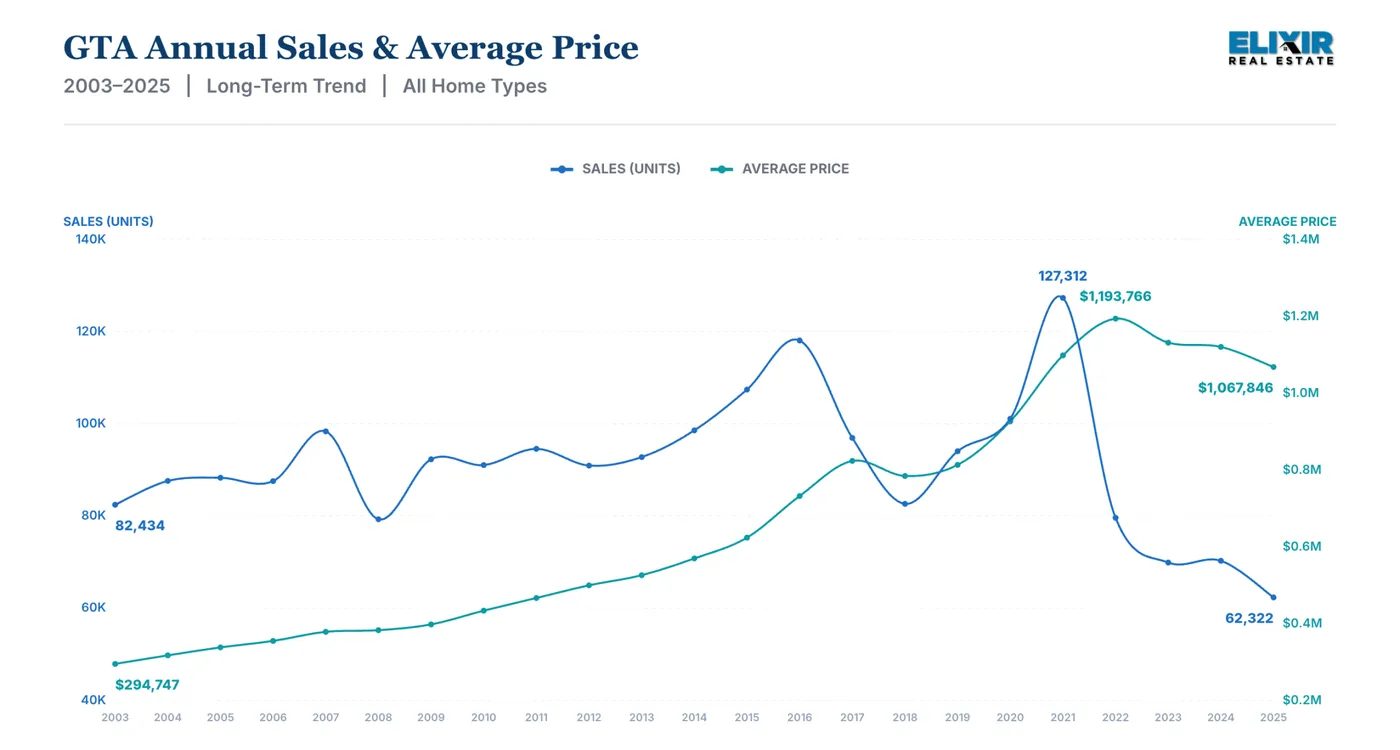
Over the weekend, I compiled annual GTA MLS® sales data from TRREB covering the period from 2003 to 2025.
Rather than looking at one month's statistics or one year's performance, I wanted to take a step back and see what the market has taught us over the last two decades.
The result is quite engaging. While every market cycle feels different when you're living through it, history shows that many of the same patterns continue to repeat themselves, much similar to stock market chart patterns.
Here are some of the biggest observations we can make. Before that sharing here the data showing us the TRREB MLS sales figures since 2003 (in blue), and the average prices overall in the GTA (in green) during the same timeframe. Also, it would be pertinent to note that this is from 2003 and up until 2025.
1. Market Activity is Cyclical
When we focus only on the last few months, every market feels unprecedented. Yet when we step back and look at more than two decades of data, a familiar pattern begins to emerge.
The first thing that stands out from 22 years of data is how dramatically annual sales volumes fluctuate. Unlike home prices, transaction activity responds quickly to changes in buyer confidence, affordability and borrowing costs. When uncertainty increases, many buyers choose to wait. As confidence returns, activity gradually recovers.
Over the past two decades, we've seen this pattern repeat itself through major events such as the 2008 Global Financial Crisis, the 2017 Fair Housing Plan, the COVID-19 pandemic, and the rapid interest rate hikes beginning in 2022. While each event was different, the market's response followed a familiar pattern—activity slowed, stabilized, and eventually recovered.
This is one of the clearest lessons from long-term data:
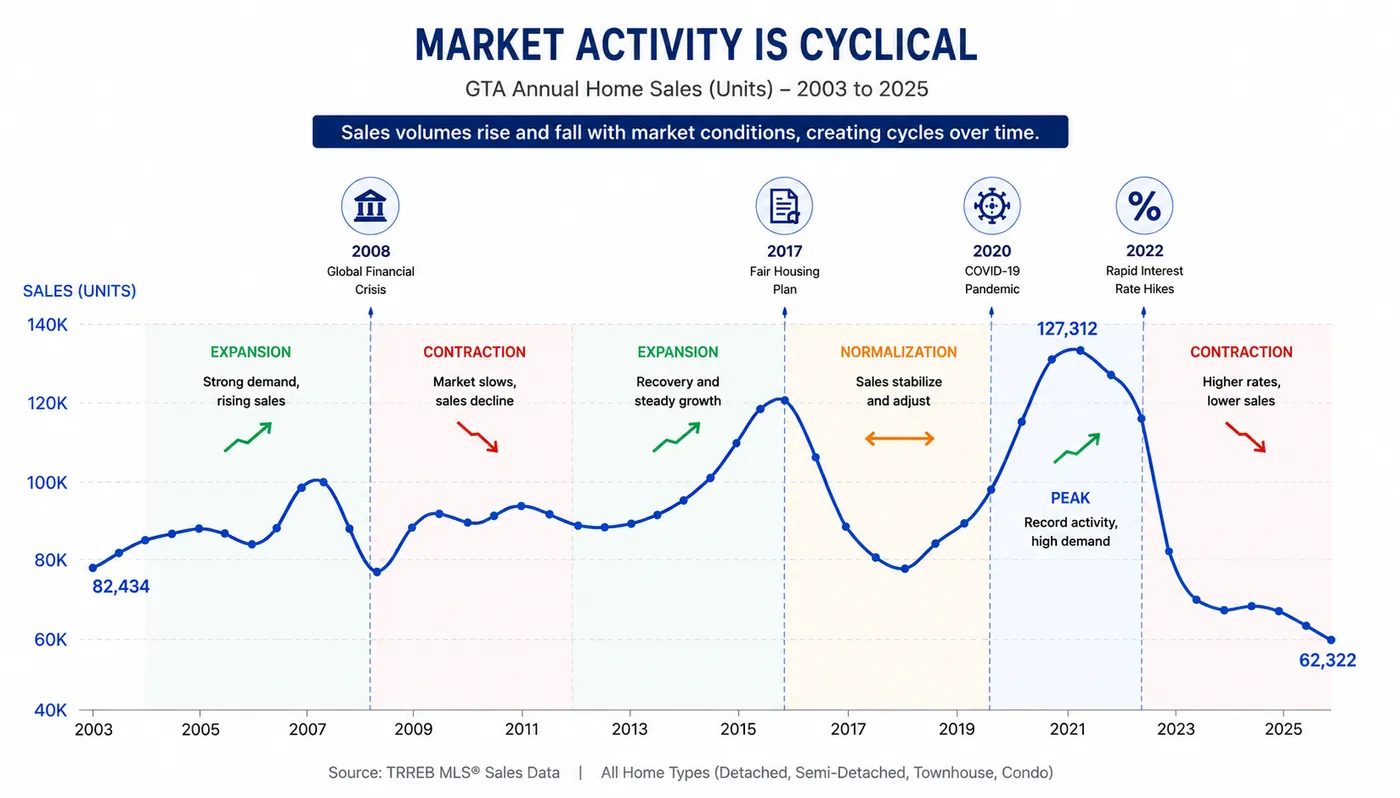
This is a good reminder that market activity moves in cycles, not in straight lines.
2. Prices Follow a Different Story
One of the most interesting observations from the data is that sales and prices don't always move together.
Sales activity can change dramatically from one year to the next as buyers react to interest rates, economic uncertainty, affordability, or changes in confidence. It's the part of the market that responds most quickly to current events.
Home prices, however, tend to follow a much longer-term path. Over the past two decades, there have certainly been corrections and periods of slower growth. Yet when we step back and look at the broader trend, average home prices have remained remarkably resilient.
Why?
Because prices are influenced by forces that change much more gradually.
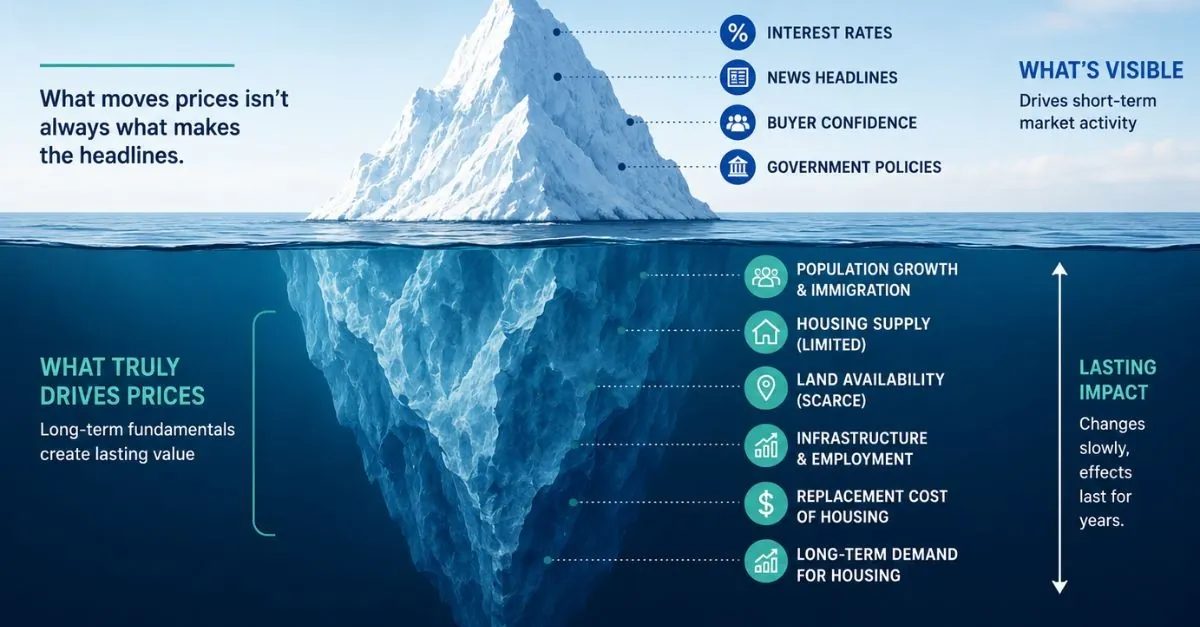
These long-term fundamentals don't change overnight, which is why home prices often behave very differently from annual sales activity. This is one of the clearest lessons from the data:
Sales reflect short-term market sentiment. Prices reflect long-term fundamentals.
Understanding the difference helps explain why slower markets don't necessarily lead to proportionately lower home values.
3. Low Activity Doesn't Always mean Lower Value
One of the most common misconceptions is that fewer home sales automatically mean home values must fall significantly.
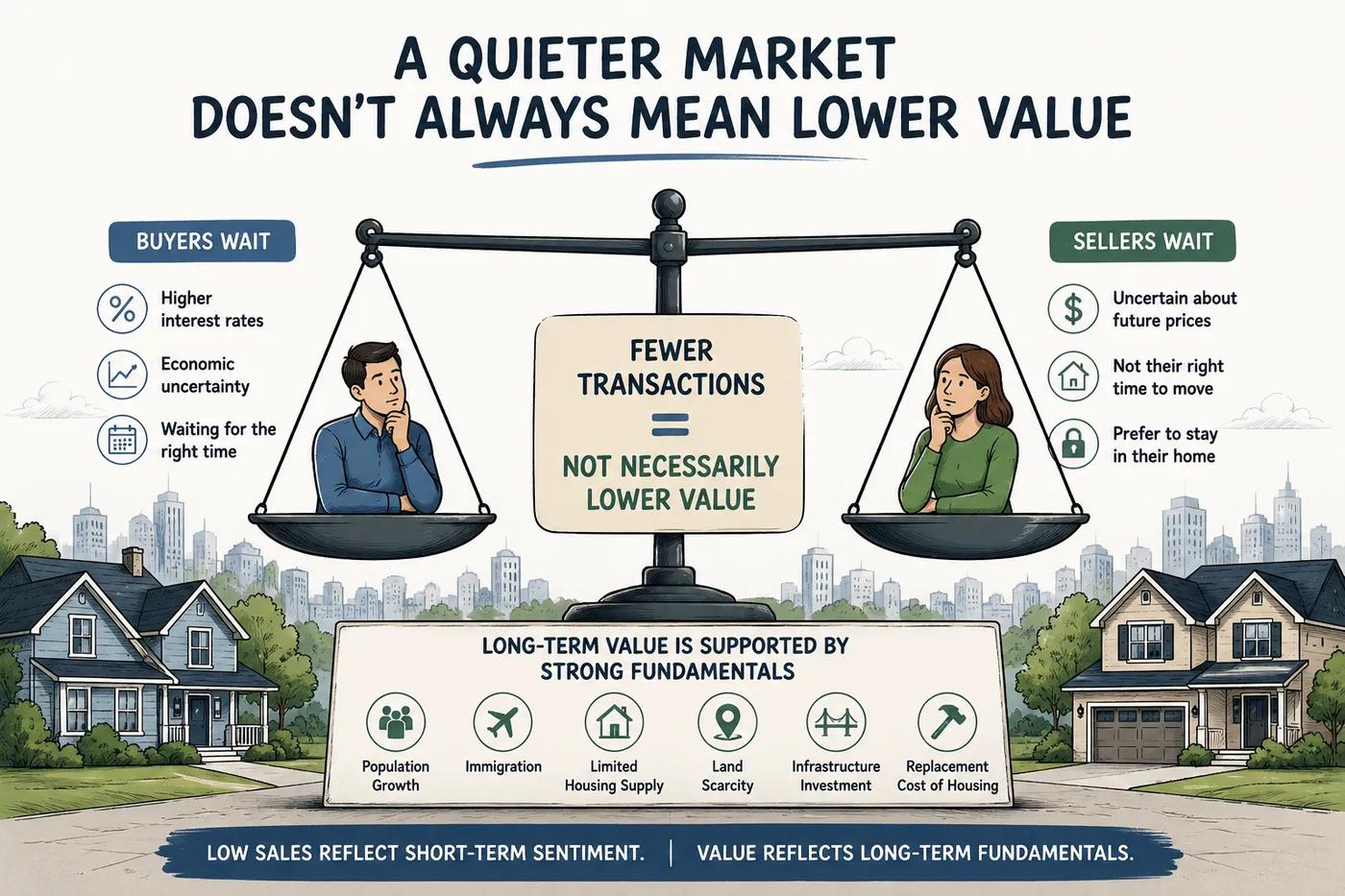
The data suggests the relationship isn't that simple. When borrowing costs rise or economic uncertainty increases, many buyers choose to postpone their purchase. At the same time, many homeowners decide not to sell unless they genuinely need to.
The result?
Fewer transactions take place, but that doesn't necessarily mean there is an excess supply of homes or a collapse in demand. Instead, both buyers and sellers become more cautious, leading to a quieter market.
This is where it's important to distinguish between market activity and market value.
Transaction volumes can change quickly because they're driven by short-term factors such as interest rates, consumer confidence and affordability.
Home values, however, are influenced by much deeper forces—population growth, immigration, limited housing supply, land scarcity, infrastructure investment and the long-term cost of building new homes. These fundamentals don't change overnight.
That's why periods of lower sales don't always translate into proportionately lower home prices.
Low sales tell us that fewer people are transacting. They don't necessarily tell us that the long-term value of real estate has fundamentally changed.
4. Housing Demand Evolves with Time
One of the biggest misconceptions during slower markets is that buyers disappear.
In reality, demand rarely disappears—it simply changes. Unlike many purchases that can be postponed indefinitely, housing is closely tied to life's biggest milestones. People don't buy homes simply because the market is strong; they buy because life moves forward.
Newly married couples look for their first home. Growing families need more space. New Canadians are building a new life. Older homeowners choose to downsize. Investors continue planning for long-term wealth.
Each group enters the market for a different reason, but together they create a continuous source of housing demand.
Higher interest rates or economic uncertainty may cause some buyers to wait, but they don't eliminate the underlying need for housing. Many purchases are simply postponed until affordability improves or confidence returns.
That's why, over the long term, demand doesn't disappear—it evolves as people move through different stages of life.
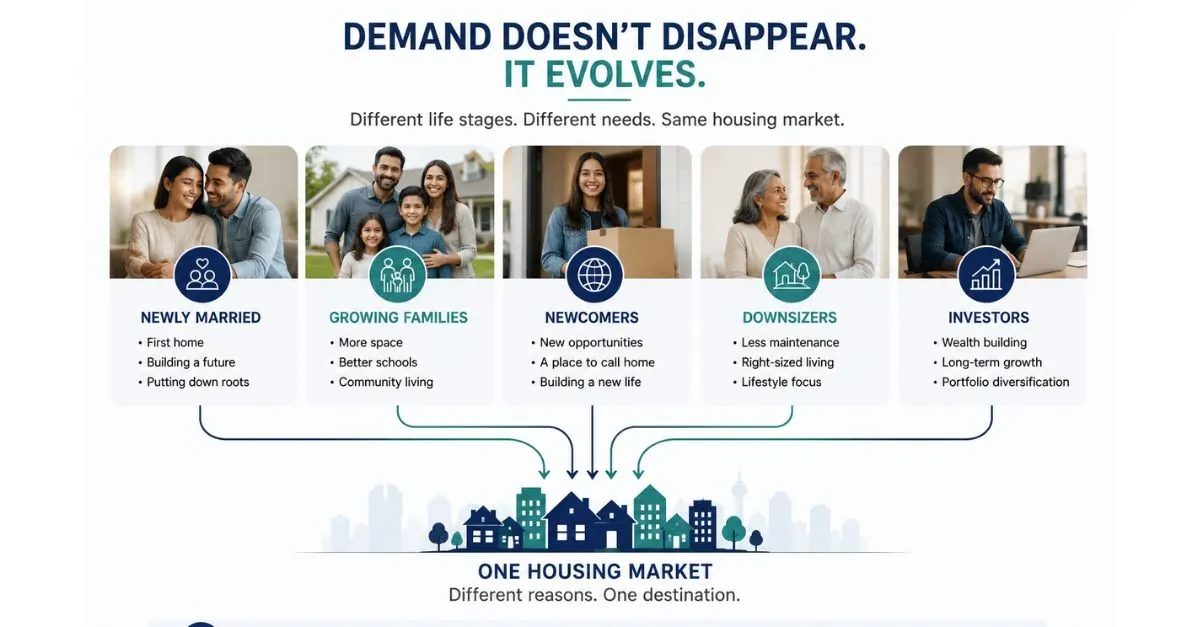
Demand rarely disappears—it is often delayed. Eventually those buyers return to the market.
5. The Market Often Corrects After Extraordinary Growth
Periods of exceptionally strong growth often create conditions that naturally lead to slower activity. Rising prices reduce affordability, interest rates adjust, buyer demand cools, and many purchasers choose to wait. At the same time, sellers who delayed listing during hot markets begin entering the market, increasing available inventory.
In other words, the market begins to rebalance.
This isn't unique to the GTA, nor is it unique to real estate. Almost every market—whether stocks, commodities or housing—moves through periods of expansion followed by periods of consolidation.
Real estate is no different.
Over the past two decades, we've repeatedly seen the market move through a familiar cycle:
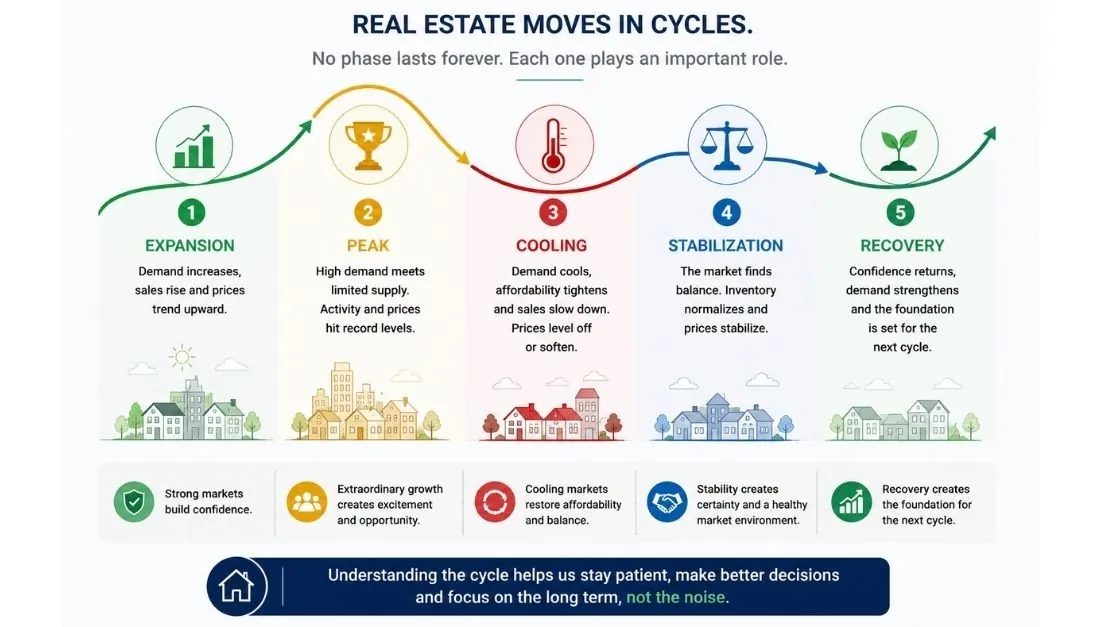
Understanding these cycles doesn't allow us to predict exactly when the next phase will begin, but it does remind us that periods of slower activity are a normal part of a healthy market—not necessarily a sign that something is fundamentally broken.
6. Long-Term Wealth is Built Through Patience
Perhaps the biggest lesson from the past 20+ years of GTA real estate isn't about prices or sales—it's about time.
Many buyers spend years waiting for the "perfect" moment to purchase, hoping to predict the exact bottom of the market. History suggests that very few people ever do.
What has consistently mattered far more is how long someone owns real estate, not whether they bought at the absolute lowest price.
That doesn't mean timing is irrelevant. Buying wisely is always important. But over longer holding periods, the impact of trying to save a few percentage points at purchase has often been overshadowed by years of appreciation, mortgage principal repayment, and the power of compounding.
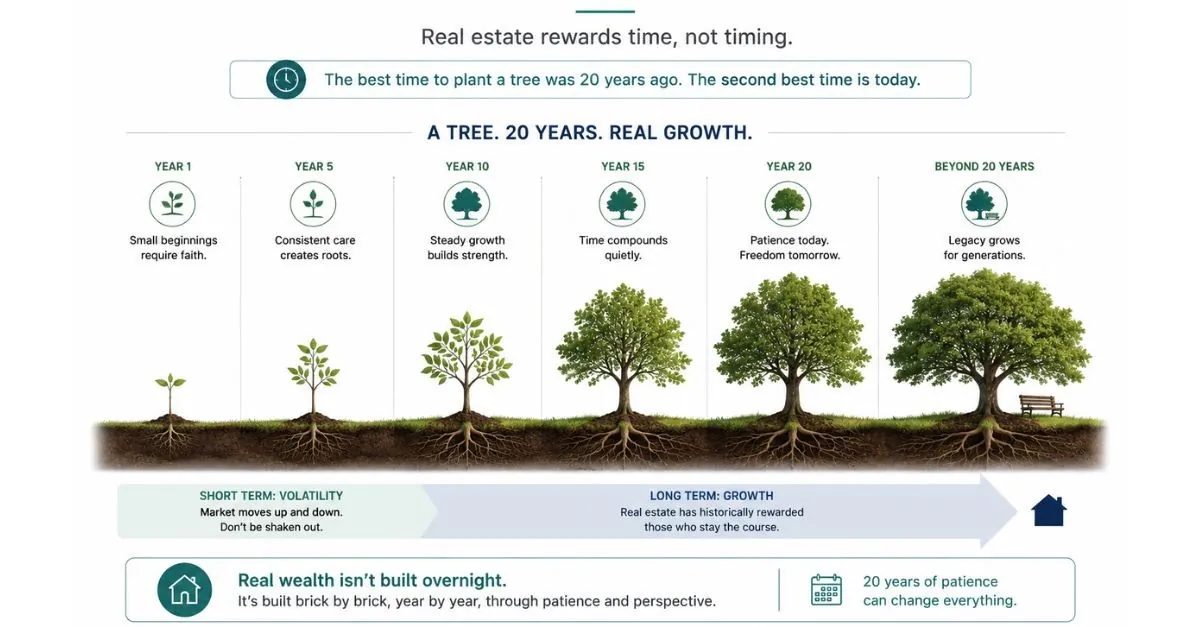
The tree below is a simple reminder of this principle. A tree doesn't become strong overnight. It grows gradually—year after year—through seasons of sunshine, storms, and everything in between.
Real estate has often followed a similar path. There are periods of rapid growth, periods of slower growth, and occasional corrections. Yet over long holding periods, patience has historically been one of the most valuable assets an owner can have.
7. Headlines Often Focus on the Wrong Time Horizon
News headlines are designed to report what happened today, this week, or this month. That's their job. As consumers, however, it's easy to let those short-term headlines shape our long-term decisions.
One month the news talks about falling sales. The next month it's rising inventory. A few months later, it's interest rates or affordability. The headlines change constantly.
The long-term fundamentals don't.
Real estate is different from many other asset classes because it's typically owned over 10, 20 or even 30 years, not weeks or months. When viewed over decades rather than months, many of the market corrections that once felt significant become relatively small chapters within a much larger story.
That's exactly what the 22-year chart demonstrates.
If you had looked only at the headlines during the 2008 Financial Crisis, the Fair Housing Plan in 2017, the uncertainty during COVID-19, or the rapid interest rate hikes beginning in 2022, it would have been easy to believe that the market had fundamentally changed.
Looking back today, those events are still important—but they represent individual chapters, not the entire book.
Perspective doesn't eliminate risk, but it helps us distinguish between short-term noise and long-term trends.
Closing Thoughts
Every market cycle feels unique while we're living through it. During slower markets, it's easy to believe that "this time is different." During strong markets, it's equally easy to believe the momentum will continue indefinitely.
History reminds us that neither is usually true.
Sales rise and fall. Buyer confidence strengthens and weakens. Interest rates increase and decrease. Government policies change.
Yet through every cycle, one constant has remained—the fundamental need for housing and the long-term resilience of the GTA real estate market.
While history can never predict the future with certainty, it provides something equally valuable: perspective. It helps us separate temporary noise from long-term trends and make decisions based on facts rather than emotions.
Perhaps that's the greatest lesson this data has to offer.
History doesn't tell us exactly where the market is going next. It reminds us that understanding where we've been often leads to better decisions about where we're going.