
Why Some $4M Homes Sell in 6 Days — And Others Sit for 6 Months

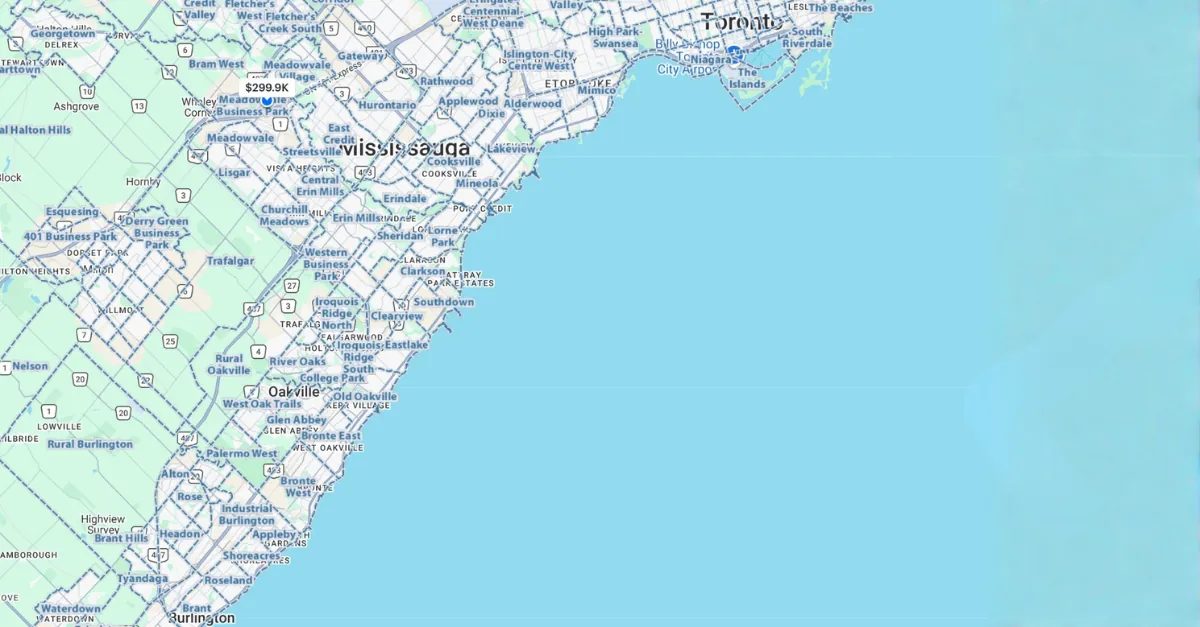
If your home is priced north of $3M in Southwest Oakville, Mineola, Morrison, or Lorne Park, you are not in a “hot market.” You are in a thin market. And thin markets don’t reward optimism. They reward alignment.
Over the past 90 days in the $3M–$5M bracket, we’ve seen something telling. A few properties sold in under 10 days, trading close to asking. Others — similar in size and finish level — sat for months and ultimately negotiated 5–7% below list. Same geography. Same price band. Completely different outcomes.
That spread is the real story of 2026 luxury
This Is Not a Demand Problem. It’s a Precision Problem.
There are buyers. They are qualified. They are financially capable. They are not stretching. But they are selective. In this bracket, buyers are not comparing payments. They are comparing conviction.
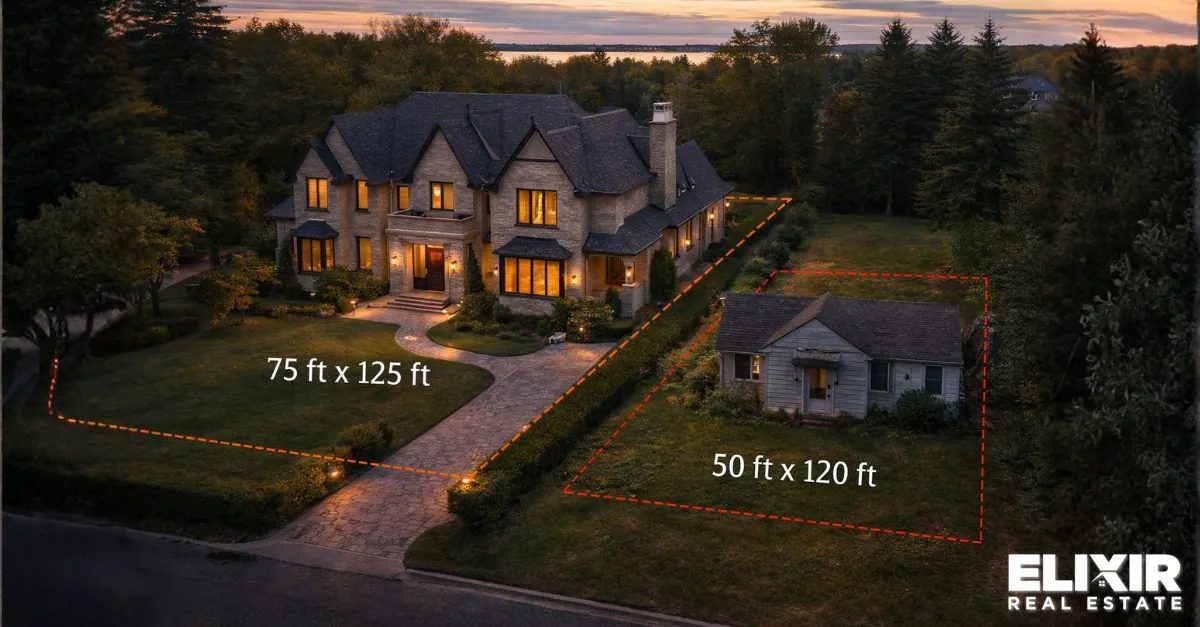
They’re asking: Is the lot defensible long-term? For example, a 75 ft x 125 ft lot will almost always age better than a 50 x 120 ft lot in the same price band.
Does this compete with teardown land values? If land in your pocket trades near $3M, your home must clearly justify every dollar above that floor.
Is the build quality obvious — or assumed? Let’s go a bit deeper into that last point.
Obvious build quality means doors close with weight and precision. Millwork lines are clean and symmetrical. Flooring transitions are seamless. Cabinetry feels solid, not hollow. Windows are high-grade and consistent. Mechanical rooms are organized and thoughtfully installed. Staircases feel engineered, not decorative.
Assumed quality sounds like “custom built,” “high-end finishes,” or “designer touches.” But when buyers walk through, they notice inconsistent trim details, slight tile alignment issues, hollow-core interior doors, builder-grade mechanical systems, or cosmetic upgrades masking average construction.
At $4M, buyers don’t pay for marketing language. They pay for structural confidence. Even if buyers don’t verbalize these things, they register them subconsciously. When quality is obvious, buyers feel calm. When it’s assumed, they feel cautious.
In Southwest Oakville, teardown floors on prime streets are approaching the $2M mark, backed by 2025-2026 listings and market trends. That quietly resets expectations. If a finished product is priced meaningfully above land value, the buyer must feel that rebuilding would be irrational. If that clarity is missing, the buyer hesitates.
And hesitation shows up as days on market.
Overpricing in Thin Markets Is Not Neutral
In higher-volume price ranges, testing price sometimes works. In $3M–$5M? Testing is expensive.
Luxury buyers track listings carefully. When a property launches above where the market believes it belongs, it doesn’t just sit — it signals. And in luxury real estate, perception compounds. When the right buyer sees 60+ days on market, negotiation posture shifts immediately.
The irony? Many homes that eventually sell 5–7% below list would likely have sold faster — and sometimes stronger — with a more disciplined launch price. Precision at launch is your leverage. Adjustment later is reaction.
The Oakville Edge That Few Sellers Factor Properly
There’s a structural edge in Oakville and Mississauga that many luxury sellers underestimate. There is no municipal land transfer tax. Toronto has one. On a $4M purchase, the difference can exceed $100,000.
Put differently, a buyer paying $4M in Toronto may effectively deploy $4.1M+ once municipal tax is factored in. In Oakville — or any municipality in Ontario outside Toronto — that same buyer keeps that capital. That delta alone can fund a full backyard transformation, interior customization, a pool addition, or simply reduce financial friction.
It absolutely influences where high-net-worth buyers choose to allocate capital. But here’s the nuance: A tax advantage improves perceived value. It does not replace discipline.
Luxury buyers may feel more comfortable at $4M in Oakville than in Toronto — but they still evaluate lot defensibility, architectural integrity, build quality, and long-term resale logic. The tax savings get them looking. Alignment gets them buying.
Structural advantages create opportunity. Precision converts it.
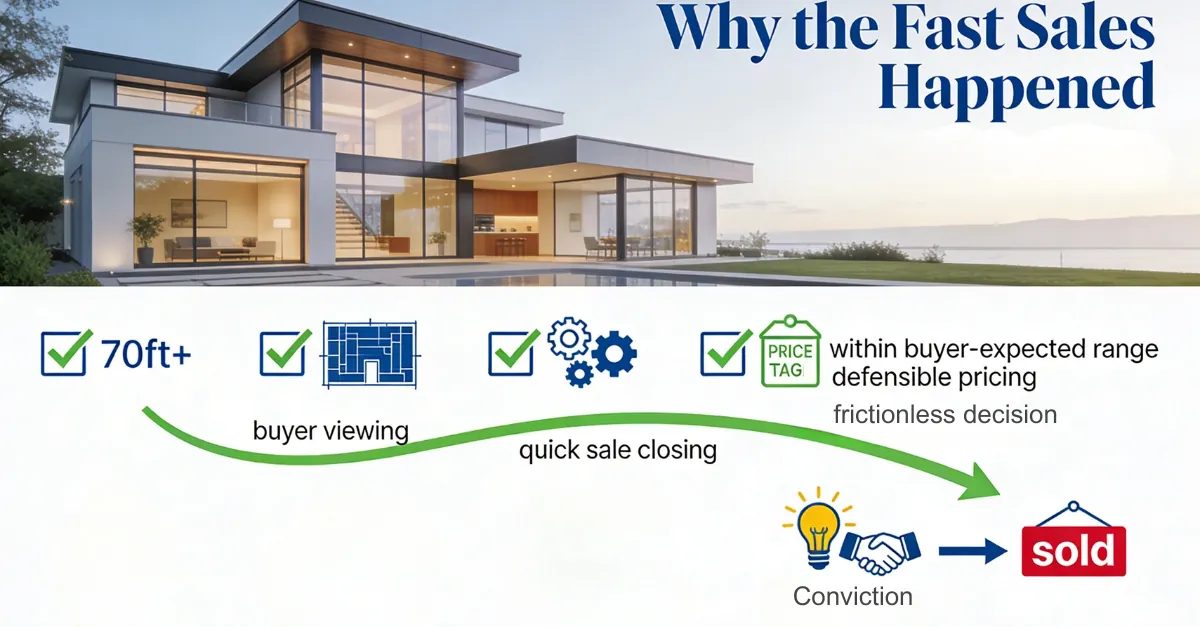
Looking at the quicker transactions in this bracket over the past few months, a pattern becomes clear. The homes that moved decisively weren’t just “nice.” They were aligned.
They sat on strong lot dimensions — and in this pocket, 70-foot plus frontage still carries weight. They had architectural clarity, not a blend of competing styles. The build felt mechanically sound and turnkey. And perhaps most importantly, they were priced within the range buyers already believed was defensible before they even walked through the door.
There was no friction in the decision.
No mental calculation about redoing kitchens. No concern about mechanical timelines. No quiet question about whether the lot justified the premium. When that friction is absent, conviction replaces negotiation. And in thin luxury markets, conviction is what closes deals — often quietly and often quickly.
The 2026 Luxury Buyer Is Disciplined
This is not 2021. Today’s luxury buyer doesn’t walk through a home — they assess it.
They notice window quality and glazing consistency. They ask about the age and capacity of mechanical systems. They test whether the smart home technology responds seamlessly. They evaluate whether the basement adds genuine flexibility or just inflated square footage. And quietly, they consider one central question:
“How easily will this resell five years from now?”
In the $3M–$5M bracket, even minor ambiguity around systems, craftsmanship, or structural integrity can translate into a $100,000–$150,000 negotiation discussion.
Not because buyers are aggressive. Because they are disciplined.
Luxury purchasing today is less about emotion and more about risk management. The buyers are still there — but their confidence must be earned, not assumed.
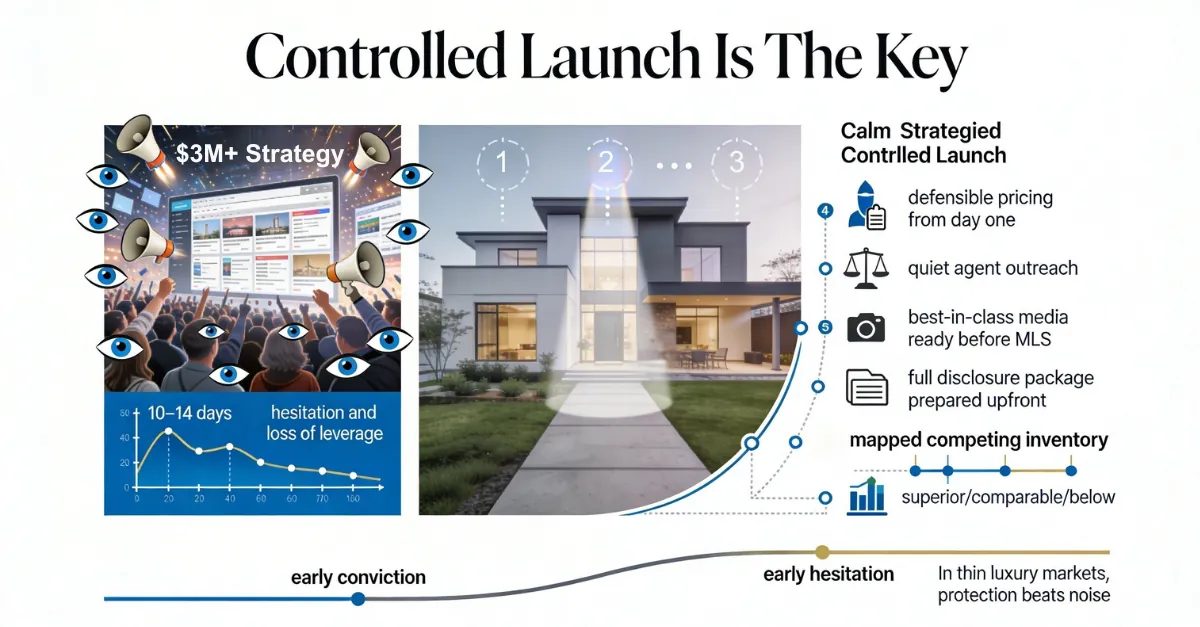
In a price band with 15–25 active listings and only a few monthly sales, exposure alone is not a strategy. It’s visibility. What weakens a luxury listing isn’t low demand — it’s visible hesitation.
When a property launches loudly and activity is slow in the first 10–14 days, the market reads that as information. In thin markets, silence becomes narrative. A controlled launch is different.
It means:
Pricing within a defensible range from day one
Quiet outreach to agents active in the bracket
Ensuring photography, video, and documentation are highest-quality fully ready before MLS
Preparing a full disclosure package upfront (mechanical ages, upgrades, permits, warranties) In this bracket, unanswered questions delay decisions. A clean, organized documentation package builds trust early and reduces negotiation leverage later.
Mapping competing inventory before launch — and positioning against it deliberatelyNot just pricing off solds, but understanding current actives and asking:Where does this sit in the competitive hierarchy? Is it superior, comparable, or slightly below? Thin markets are relative markets.
The objective isn’t secrecy. It’s momentum. Because in the $3M–$5M bracket, the first two weeks often determine leverage. Early conviction strengthens negotiations. Early hesitation shifts power to the buyer.
In thin luxury markets, protection matters more than noise.
What Successful Luxury Sellers Understand
If a $4M home sits for 120 days in this market, it’s rarely because there are no buyers. There are buyers. But in a thin bracket, buyers don’t expand their standards to accommodate a listing. They wait for alignment.
In the $3M–$5M range, there may only be a handful of truly qualified buyers active at any given time. If your property doesn’t meet their internal benchmarks on price, lot logic, build quality, or long-term defensibility, they simply move on.
They don’t negotiate aggressively. They don’t try to force a deal. They wait. And in waiting, leverage shifts.
When a luxury property lingers, it usually traces back to one of four factors at launch:
Pricing that tested the upper boundary instead of respecting the band
A lot that doesn’t justify the premium over teardown value
Presentation or architectural ambiguity that creates doubt
Mechanical or structural questions left unanswered
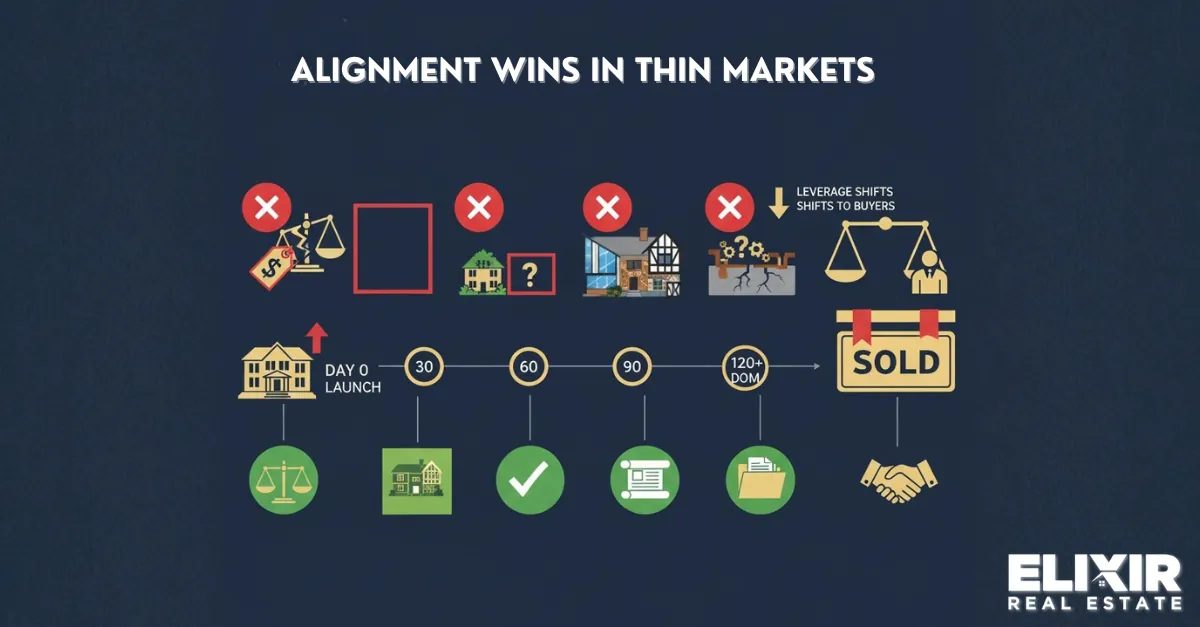
In thin markets, even small misalignments compound. Thirty days become sixty. Sixty become ninety. And once the listing crosses into triple-digit DOM, the market begins to treat it as an opportunity rather than a prize.
That shift is difficult to reverse. Luxury in Southwest Oakville and South Mississauga hasn’t weakened. It has matured. And mature markets don’t reward optimism at launch. They reward preparation, clarity, and disciplined positioning.
In this bracket, the difference between a quiet, confident sale and a prolonged negotiation is rarely demand. It’s alignment.
If you’re considering selling in the $3M–$5M range, it’s worth pausing before you list.
Not to test the market — but to understand it properly.
This segment rewards clarity, preparation, and disciplined positioning. It’s less about exposure and more about alignment. Less about optimism, and more about strategy. When the right buyer walks through a well-positioned luxury home, the decision often feels straightforward.
Getting to that point is where the real work happens.
If you’d ever like an honest, data-backed conversation about how your property fits within today’s landscape — without pressure, just clarity — I’m always happy to share perspective.
Luxury outcomes aren’t rushed. They’re prepared.