
Buying With Clarity: The Structural Choices That Define Long-Term Satisfaction

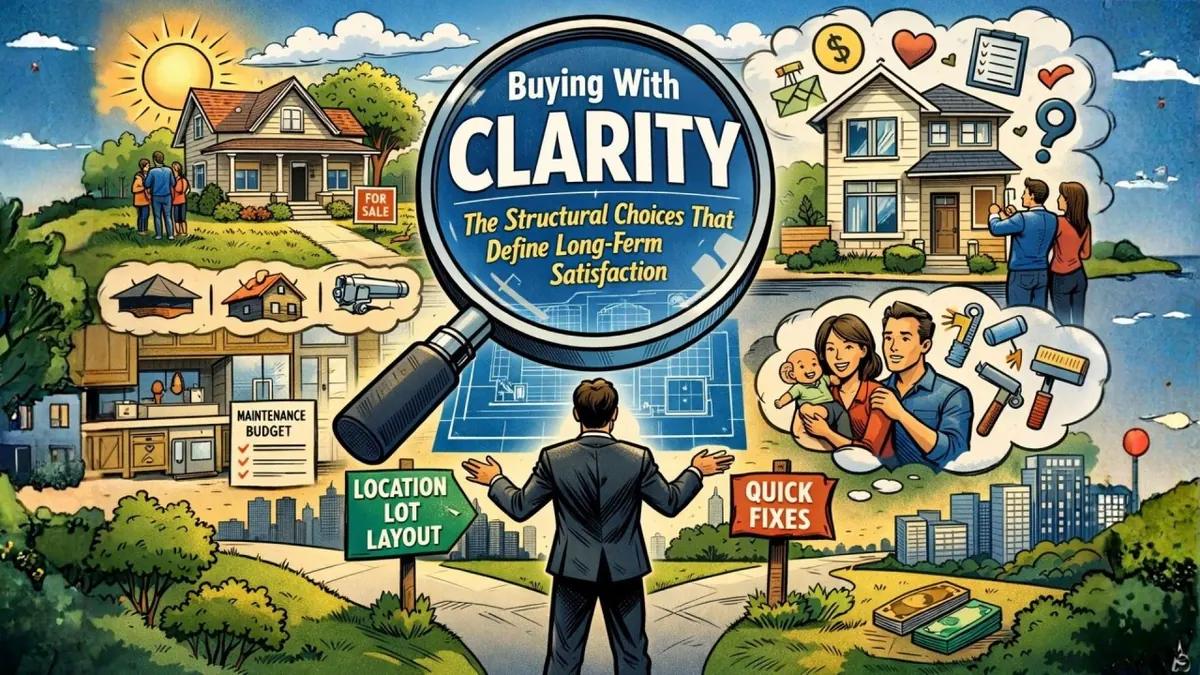
Homes are often chosen in moments of excitement—after a great showing, a well-staged space, or the relief of finally finding “the one.” But clarity rarely arrives in that moment.
Over the years, I’ve noticed that long-term satisfaction in real estate has very little to do with finishes or features, and everything to do with a handful of structural decisions buyers don’t always slow down to examine. When those decisions are understood early, confidence follows.

People don’t usually make “bad real estate decisions.” They make cosmetic decisions… and only later realize they were actually making structural commitments.
They fall in love with:
a staged living room
“new flooring smell”
a kitchen that looks like straight out of Instagram
array of glittering pot-lights and a fresh coat of paint
modern and contemporary light fixtures throughout
a sparkling Brazilian granite counters in the kitchen
And then six months later they’re realizing:
“We didn’t realize the commute would be that taxing.”
“Wish the layout would have been a bit more spacious.”
“The street is a lot busier than we thought.”
“Lot of rented homes in our street, every other month, movers truck are here.”
“We’re stuck… because resale demand is thin overall in our area.”
That’s not a market issue. It’s a fundamentalsissue.
At Elixir, we use a simple advisory lens:
Cosmetic is changeable. Structural is permanent. Cosmetic is personal taste. Structural is long-term outcome what really defines how our Real Estate decision ages.
If you’re buying meaningful real estate—whether for living or investing—there are four pillars you must understand before you fall for finishes
Cosmetic vs Structural: The 30-Second Difference
Cosmetic (Changeable, short-term, emotional): Paint, fixtures, cabinetry hardware, staging, backsplashes, quartz countertops, flooring finishes, landscaping aesthetics, gazebo in the back-yard.
Structural (Permanent, long-term, value-driven): Location, Age/Community lifecycle, Property Type, Lot and Layout/Proportions, Street Outlook, Property Composition types around the neighbourhood.
Here’s the thumb-rule:
If you can change it in a weekend, don’t let it drive a 10-year decision.
Now let’s break down the four pillars with examples that matter in the real world.
Pillar 1: Location
The Most Expensive Thing to Get Wrong
Location isn’t just about “good area vs bad area.” It’s about who wants to live there in the future—and how easy it will be to resell or re-rent when life changes.
A first-time buyer is contemplating between two condos. Same size. Same finishes. Similar price.
Condo A: “looks newer,” better staging, nicer lobby
Condo B: slightly older finishes, less wow-factor
But Condo B is:
walkable to transit + daily essentials
surrounded by stable demand drivers (schools, employment, amenities)
in a pocket where buyers routinely “stretch” to get in
Fast forward 5 years. Condo B typically has more resale liquidity because more people want it—even if it was less pretty on day one viewing.
A move-up buyer family buys the “bigger house” in a farther pocket because it feels like more value. Then reality hits:
longer commute = less time
kids’ activities become harder
visiting friends and family becomes effort
they start living around the distance
They didn’t buy a house. They made a lifestyle decision for years to come.
Investors often ask: “Will it cashflow?” A better first question is:
“Will it rent easily to the tenant profile I want—consistently—at the rent I need?”

Because a weak location doesn’t just reduce appreciation. It increases vacancy risk, increases tenant turnover, and exhibits higher rent sensitivity.
Location shapes demand, and demand is what creates liquidity and long-term safety.
Pillar 2: Age (Home + Community Lifecycle)
You’re Not Choosing Old vs New — You’re Choosing How You Want to Live With the Property
Many buyers treat age as a simple preference: old or new. In reality, age determines how a home functions over time, not just how it looks on day one.
Age influences:
the maintenance curve
renovation predictability
infrastructure maturity
lot sizes and room proportions
the type of buyer or tenant the home will appeal to later
What Older Homes Often Do Better
In the GTA, older neighbourhoods frequently offer things that are difficult—and expensive—to recreate today:
Wider and deeper lots
Larger backyards
More space between homes
Wider streets and calmer traffic flow
Mature trees and established landscaping
Room proportions that reflect a different era of land use
Amenities, Schools, and Conveniences established in the neighbourhood
These are not cosmetic advantages. They affect privacy, light, outdoor usability, and long-term desirability.
As land has become more scarce and valuable over time, newer developments are often built on:
narrower frontages
shallower lots
higher density streets
mixed property types
That lot width and depth reality shows up in tighter interior layouts, smaller side setbacks, and less outdoor space at the rear. Neither is “right” or “wrong.” They simply serve different priorities.
A first-time buyer chooses a 25–40-year-old home because it feels solid, spaced out, and more livable—especially outdoors. That can be a very strong decision.
However, it often comes with:
planned mechanical replacements (roof, windows, HVAC)
systems installed at different points in time
renovations done in layers over decades
That’s not a flaw. It’s a choice that requires a real maintenance budget and a measured mindset, not surprise or avoidance. At the time of purchase if major mechanical items are taken care in the recent past by the owners, you are majorly covered.
Move-up buyers sometimes underestimate project fatigue. They buy an older home thinking:
“We’ll update the kitchen later”
“Bathrooms are fine for now”
“We’ll renovate as we go”
Then life fills in the gaps—kids, work, schedules. “Later” stretches out, and the home sits in a permanent in-between state. The home itself isn’t the issue. The time and energy required to execute the plan is.
Older communities can be excellent for investors:
stronger land value dynamics
stable tenant demand
neighbourhoods that have proven longevity
provides the much needed upside potential in the Real Estate to the investor
The learning we should have is that Age is not a style decision. It’s not a “new is better” or “old is better” debate. Age is rather an operational decision, and should come out of your family goals and aspirations, or your investment goals and exit timelines.
The decision on 'Age' determines:
how much involvement the home will require
how the neighbourhood feels day-to-day
how land value vs structure value plays out over time
When buyers understand this early, older homes become a strategic choice, not a compromise—and newer homes are chosen with clear expectations, not assumptions.
Pillar 3: Property Type
Property Type Isn’t Just a Budget Decision. It’s a Lifestyle + Risk Decision.
Condo, townhome, semi, detached—these are not just property styles. They behave differently in:
demand cycles
maintenance responsibility
fees and cashflow
resale buyer pools
sensitivity to rate changes
A first-time buyer chooses a condo because “it’s the entry point.” Great. But the important question is:
Does the building attract end-users or mostly investors?
What is the fee trajectory in last 10-15 years?
How does the building compete with nearby supply?
If we decide to rent the unit in future, how much is the net rent after contributing for the monthly maintenance fee for the unit?
A condo can be a strong first step—if it’s in the right demand pocket, an efficient layout, with a building having strong amenities that holds up over time.
Many move-up buyers jump to detached because “that’s the goal.” But sometimes the best move-up decision is:
a freehold town in the right location
with a better layout
and lower carrying costs
while keeping future flexibility
Quality of space matters more than quantity.
For instance, Condos can be smoother operationally. Freeholds can have stronger long-term land value dynamics. But either can be a poor investment if the fundamentals don’t align.
Property type must match your time, tolerance, and exit plan.
Pillar 4: Layout + Room Proportions
The Silent Deal-Breaker You Can’t Renovate Away (Economically)
Layout is where real regret lives—because it shows up daily. You can very economically change:
painting in the property
counters in kitchen and baths
lighting fixtures across the home
floors which are very modern and inviting
But you can’t easily change:
room proportions
flow between the rooms
stair placement in the property
wasted square footage, becomes specially important when we purchase condos. On paper, the floor plan might appeal to you, but take it to the next level and visualize its practical day-to-day usage.
cozy kitchens that don’t function
bedrooms that don’t fit real furniture
A first time buyer on review of a unit may fall in love with a “modern look,” but the bedroom barely fits a queen bed and one side table. It feels fine on a showing. It becomes frustrating every day after closing.
A move-up buyer who is buying for “more space" in a low-rise, but the space is poorly distributed:
oversized formal room no one uses
tight kitchen where everything piles up
lack of sufficient storage
awkward family room placement
So they have more square footage… but less livability.
And even if we're looking as Real Estate Investor. Layout drives tenant satisfaction. Tenants don’t pay more for fancy staging. They pay for:
functional rooms
storage
workable kitchens
privacy and flow
A bad layout is rejected as tenant is more open to select another layout which gives better value for their rent.
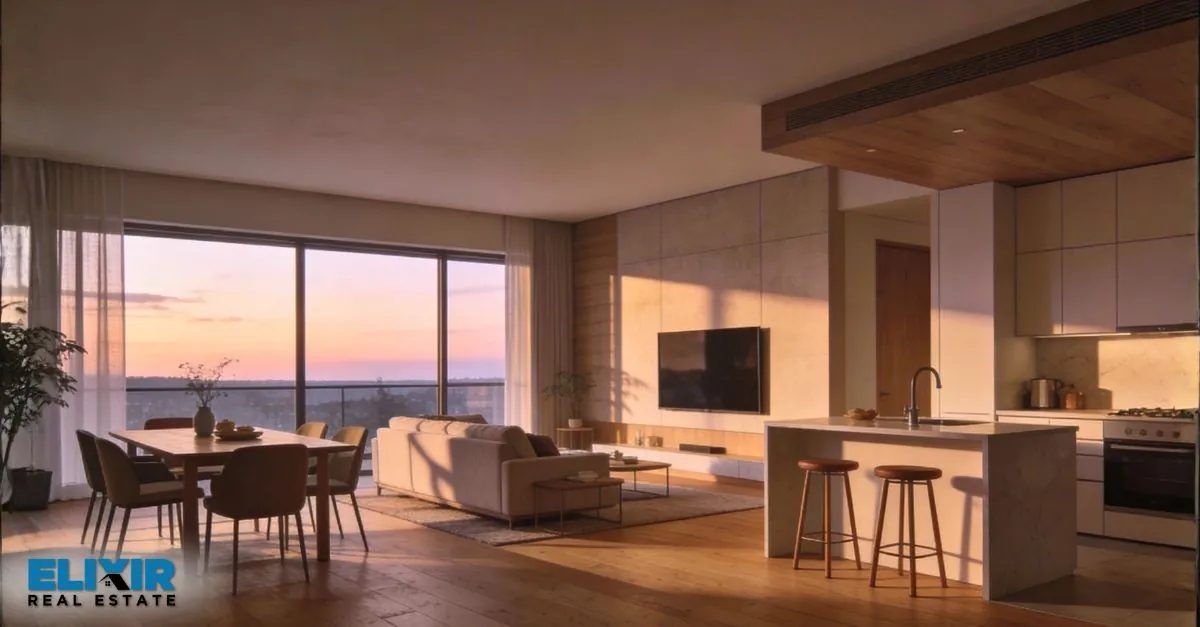
You don’t live in finishes. You live in layout.
The Biggest Trap: Confusing “Feeling” With “Fit”
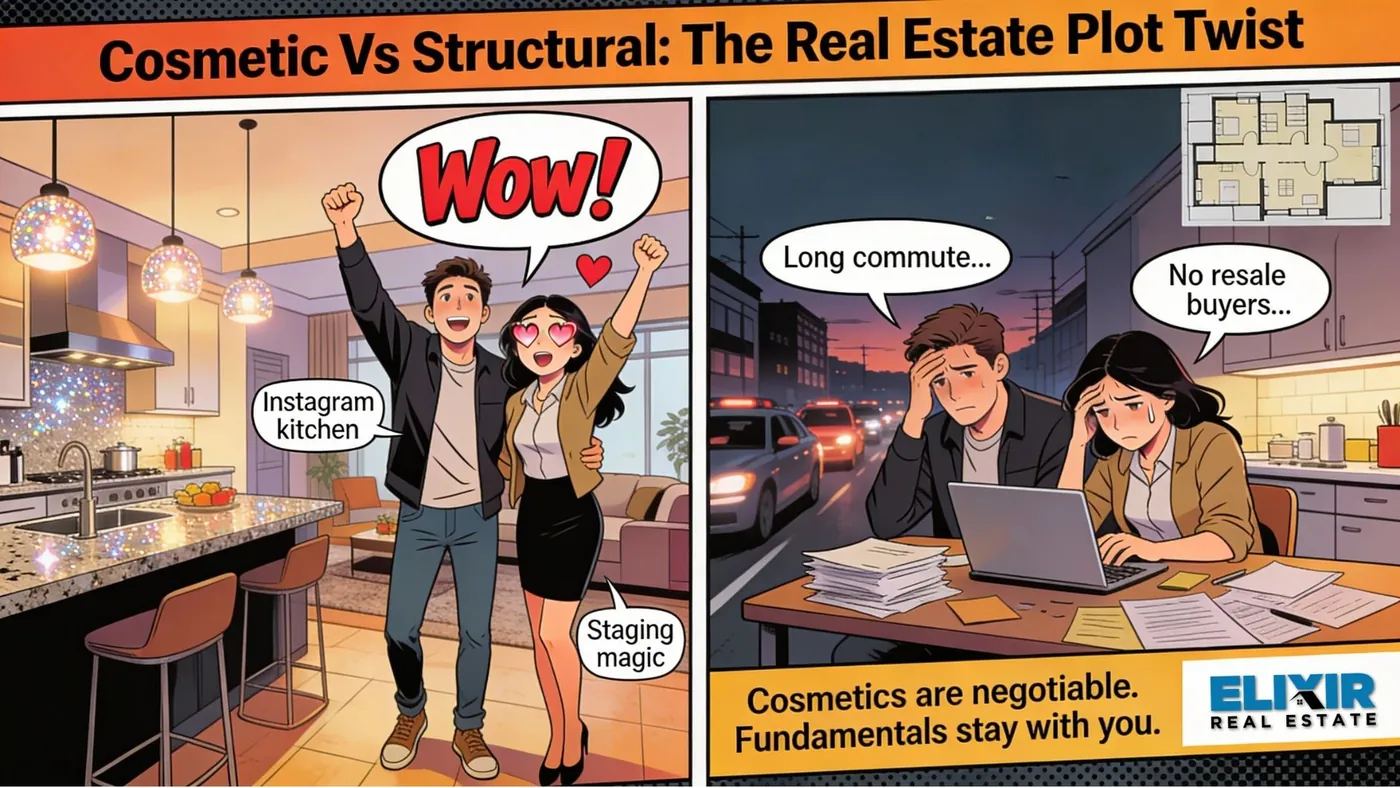
Staging is designed to create emotion. The job of a good advisor—and the responsibility of a serious buyer—is to separate:
“This looks beautiful today” from “This will work, perform, and resell tomorrow.”
That’s what these pillars do.
They create:
clearer decisions
fewer wasted showings
less emotional burnout
stronger negotiating confidence
better outcomes over a 5–10 year horizon
A Practical Way to Use This Framework
The “One Hour Rule” Before You Fall in Love
Before you get attached to a home, pressure-test it:
Location: Would I still choose this pocket if the home was plain?
Age: Am I comfortable with the lot specifics, neighbourhood amenities, and maintenance curve here?
Property Type: Does this match my lifestyle/investment strategy?
Layout: Would this still function if it wasn’t staged?
Cosmetics should be considered last, not first. Yet in most buyer journeys, finishes are what capture attention before fundamentals are fully examined.
Because Cosmetics are negotiable. The fundamentals stay with you.

Meaningful real estate isn’t chosen when you find the prettiest house. It’s chosen when you understand the structure beneath the emotion—and make peace with the trade-offs.
Whether you’re a first-time buyer, a move-up family, or an investor in the GTA, this framework is how we sense-check decisions before excitement takes over. It brings clarity early, reduces regret later, and leads to choices that hold up over time.
Because the real goal isn’t just to buy a home. It’s to make a decision you’ll still stand behind five or ten years from now.
If you’d like a thoughtful conversation about how fundamentals—like lot characteristics, layout, and neighbourhood structure—shape daily living today and resale strength tomorrow, I’m always happy to connect.