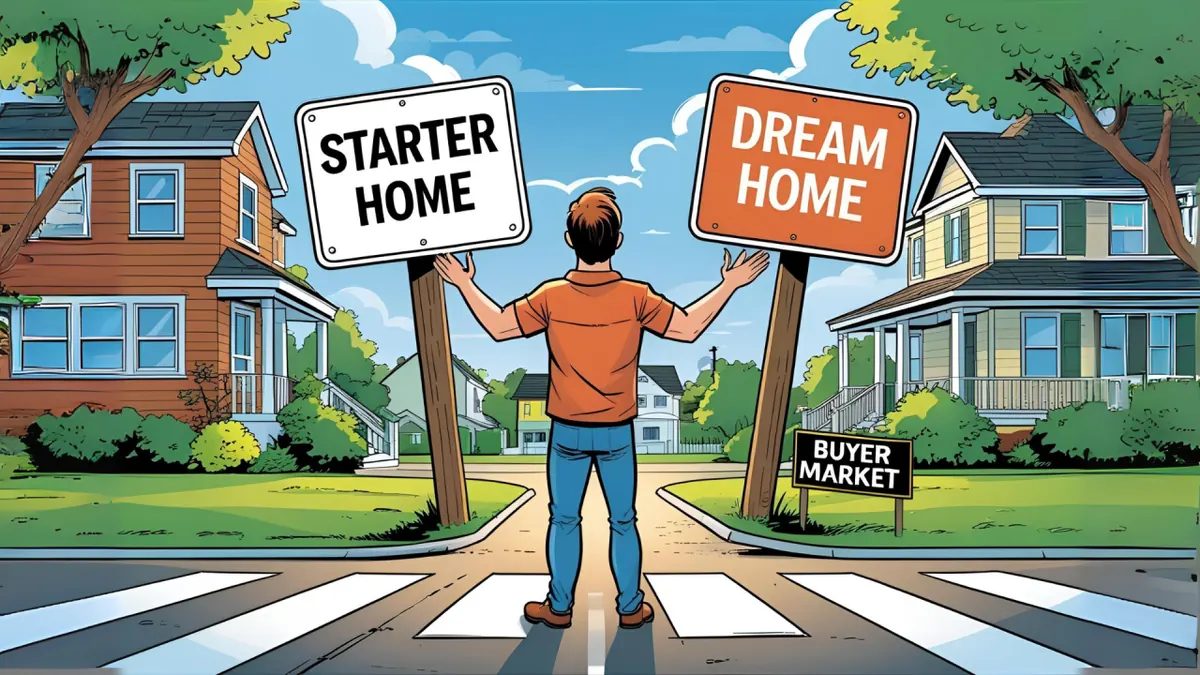
Buy First or Sell First? A Move-Up Strategy

Strategic Insights for Homeowners Navigating the GTA Real Estate Market
Over the years, I've had the privilege of guiding hundreds of families across Oakville, Mississauga, Brampton, Toronto, and the broader GTA through this common yet crucial question:
Should we sell our current home before buying the next — or buy first and then sell?
The answer isn't one-size-fits-all. But if you know how to align your strategy with the current market conditions, your financial flexibility, and your lifestyle goals, this decision becomes a lot clearer — and a lot less stressful.
Let's break it down.
The Ideal: Synchronizing Both Transactions
In a perfect world, you'd time everything flawlessly — selling your current home and closing on the new one in seamless sync.
And while that's possible, it requires careful planning, realistic timelines, and a proactive agent who understands how to bridge the gap without creating any undue pressure.
For most homeowners, the best approach I always recommend is to start preparing both sides early:
Begin your next-home search while getting your current home ready for market Monitor listings, financing, and initiate activity in both directions Have clear backup plans (e.g., bridge financing, rent-backs, or short-term rentals)
But this strategy flexes based on the market, the factor of the prevailing market conditions influences this decision.
In a Buyer's Market: Sell First (no compromise on this)
In a slower or buyer-driven market — where homes take longer to sell and buyers have more choice — the risk dynamics shift. My advice in such conditions is clear: secure your sale first before committing to a purchase.
As of July 2025, this reflects the reality across much of the GTA. If you're planning a move in today's market, having a firm sale agreement in place is the smartest first step.
That said, it doesn't mean you should wait to start your home search. In fact, I encourage clients to begin shortlisting potential properties in parallel while their current home is on the market. This way, once you've found the right buyer and the sale is firm, you're ready to move quickly on the buy side — with options that already align with your goals and budget.
Further, it's often smarter to sell your current home first to avoid:
Carrying two mortgages Needing to reduce your asking price out of urgency, and losing your negotiation leverage Being forced into a pressure situation in case your property takes time to sell and you have to complete obligation for your own purchase Transition into new property with greater confidence and peace of mind
You gain more flexibility in your purchase if your sale is already firm — and, in some cases, you may even negotiate a rent-back with the purchaser so you don't feel rushed. Many a times I have utilized this to handle move-ups for my clients.
In a Seller's Market: Buy First (if you can)
When inventory is tight and buyers are competing aggressively — which we've seen across many GTA pockets in 2016-2017 and then again in 2021-2022 — it often makes sense to secure your next home first.
Why?
Finding the right home could take time due to tight inventory conditions, you might have to place an offer for multiple homes before being successful You'll likely sell your existing property quickly, due to the seller-driven market, selling is usually very crisp and agile You maintain negotiating leverage by riding on the wave and giving slightly more time to the sale and secure the buy and freeze the purchase price
This strategy demands financial readiness — such as pre-approval, access to equity, or bridge financing — but it lets you move with confidence when your dream home appears. The bridge financing tool gives you as a buyer lot of peace of mind, in case there are any delays in the selling of your current property. It is a cost-effective way to manage the move efficiently without losing sleep.
In a Neutral Market: Sell First (preferred option)
When the market isn't clearly favouring either side — which we occasionally see in parts of the GTA — I generally advise clients to sell first. It brings a sense of calm and clarity to the entire move-up journey. Knowing what your current home sells for allows you to stay grounded in your budget and align your next purchase with far greater confidence.
In a balanced market, tools like:
Extended closing periods Conditional purchase offers Lease-backs or short-term rentals
... can create the time buffer needed to buy smart without financial pressure.
Navigating Your Next Step
Every homeowner's situation is different. Some clients value certainty and risk mitigation, others prioritize opportunity and flexibility.
Ask yourself:
How competitive is your current home's segment? How flexible is your financing and down payment timeline? Is your Bridge Financing arranged with the bank for the perfect move-up?
These aren't just questions — they're strategy points.
Real Advice for Real Transitions
If you're thinking of making a move in 2025 or 2026, don't just ask: "Should I buy or sell first?"
Ask: "How can I make both transitions work for me in the current market?"
Because when done right, you won't just be moving houses — you'll be moving forward with clarity and confidence.