From Homeowner to Investor: The First Rental Leap Explained


How move-up buyers can retain their first home as a long-term wealth asset?
In real estate, most people celebrate when they buy their first home. But the real wealth leap often happens when they decide not to sell their current primary home.
And in fact turn your current home into your first rental property instead of cashing out when you move up.
1️⃣ The Typical Mississauga Scenario
Consider a couple who bought a 3-bedroom semi-detached home in Mississauga (Heartland area) back in 2017 for $690,000, with 10% down ($69,000).
Fast forward to today (Q4 2025):
Current fair market value: $950,000
Remaining mortgage: ~$480,000
Market rent: $3,300–$3,500/month
They want to move up to a detached home in Oakville around $1.25M.
Their first instinct?
“Let’s sell our semi and use the equity for the new home.”
Logical, yes. But not necessarily strategic.
2️⃣ The Real Decision: Sell or Keep?
For many move-up buyers, the real question isn’t “Should I sell?” — it’s “What’s my best next move?”

Sometimes selling makes perfect sense — especially if the equity you’ve built unlocks your dream home, strengthens your cash flow, or aligns with your lifestyle goals.
But in other cases, holding your first home as a rental can be a powerful equity building strategy — one that keeps your past purchase working for your future.
The key is understanding both paths clearly before deciding. Let’s look at how retaining the property can perform financially.
3️⃣ The Smarter Option: Keep and Refinance
Instead of selling, they refinance up to 80% of the home’s value (80% of $950,000 = $760,000).
After paying off their existing $480,000 mortgage, they access about $280,000 in non-taxable equity — funds that can be used as the down payment on their next Oakville detached home.
They buy their primary move-up property ✅
Their Mississauga semi becomes a rental asset ✅
They now own two appreciating homes instead of one.
4️⃣ The Rental Math: Lets breakdown the numbers while keeping them conservative
Mississauga Semi (now a rental unit)
Value: $950,000
New mortgage (after refinance): $760,000 @ 3.8% (30-year amortization)
Monthly payment:$3,528
Property tax + insurance + maintenance:$500/month
Total carrying cost:≈ $4,030/month
Estimated rent:$3,400/month
➡️ Monthly shortfall: ≈ $630/month
But look at what’s really happening behind the scenes:
Principal paydown: ≈ $1,150/month ($13,800 per year)
Appreciation (3%): ≈ $28,500/year
That’s a total equity gain of ~$42,300/year — even while you contribute ~$7,500/year to cover the small gap.
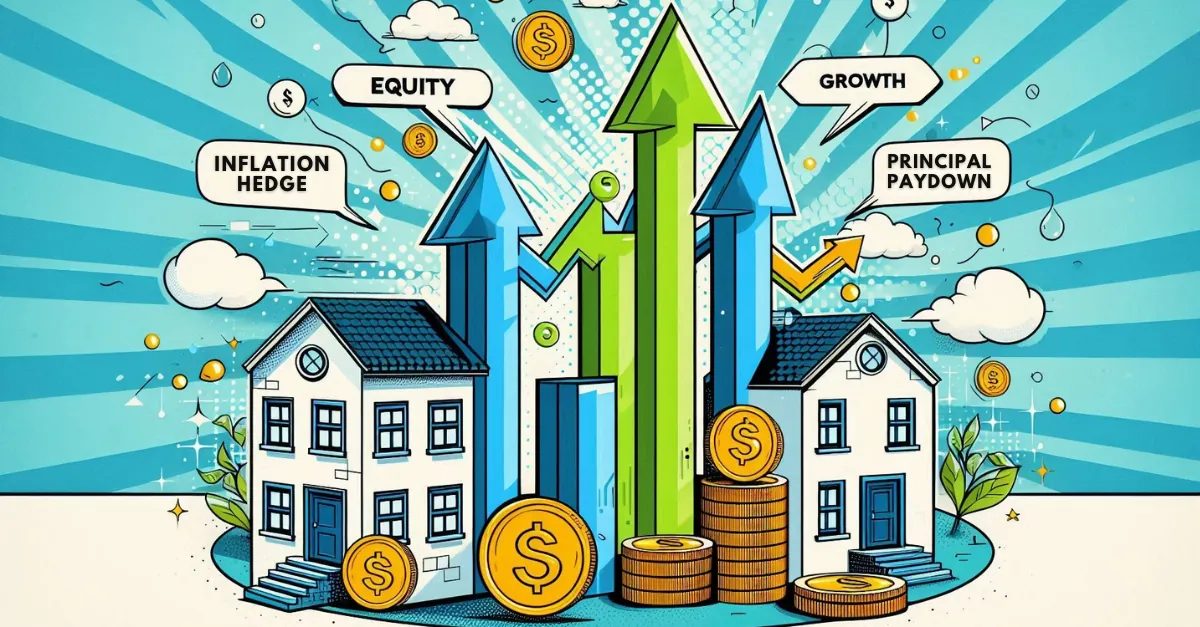
In simple terms, you’re investing $7.5K per year to grow $42K in wealth — that’s nearly a 25% return on your out-of-pocket input.
5️⃣ How This Helps Them Qualify
Most lenders will include a portion of your rental income — typically 50% to 80% — when qualifying you for your next mortgage. If your Mississauga semi rents for $3,400/month and you have a signed lease or appraisal, the bank can recognize up to $2,720/month toward your qualifying income.
In other words, your first home doesn’t hold you back — it can actually help you qualify for your move-up property and at the same time being an asset in your portfolio.
6️⃣ Five-Year Wealth Comparison

Here’s how:
Mortgage balance at Semi reduces from ~$760K → ~$691K in 5 years
Home value grows from $950K → ~$1.10M (assumed at 3%/yr)
That’s $409K equity in the Semi (rental) alone
Plus new home equity = total net worth ≈ $1.06M
In short, by keeping rather than selling, they add over $400,000 in combined wealth within just five years — largely powered by appreciation and principal repayment reduction over 5 years.
7️⃣ Common Questions (and Clear Answers)
💭 “What if I don’t want tenant headaches?” Hire a professional property manager — they typically charge about 8–10 % of the monthly rent (plus a one-time leasing fee when a new tenant is placed). They handle everything from tenant screening and rent collection to maintenance coordination, so your property stays income-producing without day-to-day involvement.
💭 “What about taxes?” Once your home becomes a rental, you’ll report the income annually — but you can also deduct expenses like mortgage interest, insurance, property tax, maintenance, and management fees.
When you eventually sell, only the appreciation during the rental period is taxable, and even then, only 50% of that gain is subject to tax. For many homeowners, this means keeping their first home as a rental can be a tax-efficient bridge to long-term wealth.
💭 “What if rates rise?” Yes, payments rise — but rents historically rise too. And because you’ve fixed your rate for 3–5 years, your payments stay predictable while rent trends upward.
💭 “What if I don't have much equity built in my current home?” Yes, in such cases it the only option would be to free-up your borrowing capacity in order to do a worthy move-up your you've planned.
💭 “Should I buy first or sell first” This is one of the biggest timing dilemmas.
Buy first: less pressure finding your next home, but requires financial flexibility.
Sell first: more certainty on equity and closing timelines.
In fast-moving markets, bridge finance strategies or extended closings can help align both. If you are curious and want to learn more on this, refer here my earlier piece on this subject: Buy First or Sell First.
💭 “How do I decide if keeping my first home as a rental actually makes sense?” It depends on rent-to-value ratio, equity position, and long-term goals. Even a small shortfall can be worthwhile if the property grows your net worth over time.
💭 “How do I know if now is the right time to move up?” The right time isn’t just about market timing — it’s when your lifestyle and finances align. With my time working and practicing Real Estate what I can tell you is that Real estate is long-term wealth architecture, not a sprint.
8️⃣ The Mindset Shift
The biggest barrier isn’t financial — it’s psychological. Most people see their first home as sentimental. Investors see it as a seed for long-term growth.

Your first home is your lowest-cost entry into the GTA market. Replacing it later is almost impossible. Holding it transforms you from a homeowner into an investor — quietly compounding equity while tenants help carry the load.
The Long Game
The “first rental leap” isn’t about collecting homes — it’s about stacking time and placing suitable tenants to let wealth build itself. In a span of 10 yeras, your mortgages shrink, property values appreciate and you have two equity engines working at the same time.
This path lets you enjoy the move-up residence and at the same time integrates it with your portfolio building aspiration.
That’s not luck — that’s planning and strategy.
💬 Final Thought
The biggest real estate mistake isn’t buying too late — it’s selling too early. For many GTA move-up buyers, keeping that first semi as a rental is the single smartest financial decision they’ll ever make.
🔸 In Closing
At Elixir Real Estate, we specialize in helping families structure this transition — from evaluating rental potential to coordinating refinance and move-up purchases seamlessly.
If you’re planning a move in the near term, let’s explore whether your current home can become your first investment property. Let’s run the numbers together — you might be surprised how much potential your current home holds.