Fear of Missing Out vs. Fear of Overpaying


The GTA Buyer’s Quiet Tug of War
One of the most fascinating aspects of real estate has very little to do with interest rates, inventory, or square footage. It has to do with psychology.
In almost every buying journey, there comes a moment when two powerful emotions begin competing for control:
“What if I wait and prices go higher?” vs. “What if I buy now and regret paying too much?”
This internal tension is one of the most common reasons buyers feel stuck. And in today’s evolving GTA market, it is more relevant than ever.
Two Fears. One Decision.
Buying a home is one of the largest financial commitments most families will ever make Naturally, we as buyers want certainty. But certainty rarely exists in real estate same as in any other market.
Instead, buyers must make decisions while balancing incomplete information, changing market conditions, and significant emotional pressure.
This creates a tug of war between:
Fear of Missing Out (FOMO)
The concern that hesitation today may mean:
Higher prices tomorrow
Rising competition
Losing the “perfect” property
Delaying long-term wealth creation
Fear of Overpaying
The concern that acting too soon may mean:
Purchasing before prices soften further
Paying more than fair value
Feeling regret after closing
Both fears are rational. The challenge is that they often pull buyers in opposite directions.
The Cost of Emotional Oscillation
In my working through years I have seen many buyers move through the following cycle:
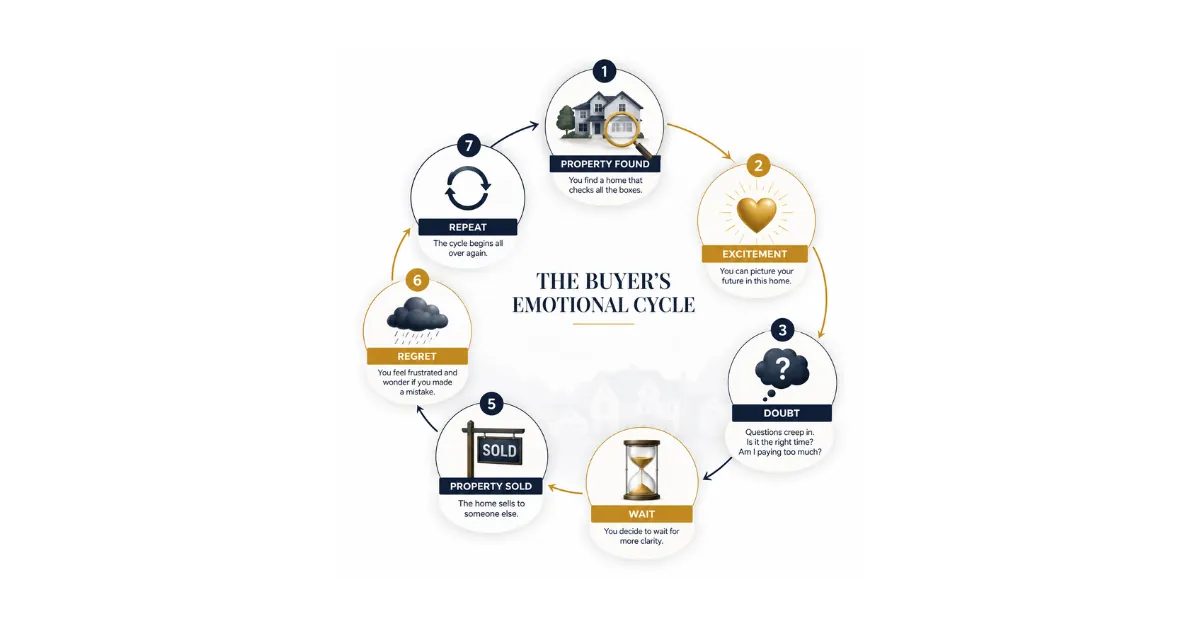
Over time, this indecision can become costly. Not because buyers are less careful. But because emotional uncertainty prevents decisive action.
Waiting Has a Price Too
Many buyers focus exclusively on the risk of overpaying. Far fewer consider the cost of waiting.
That cost may include:
Additional rent payments
Continued exposure to inflation
Lost mortgage principal repayment
Missed appreciation
Reduced purchasing power if rates or prices rise
In other words:
Not buying is also a decision.
And like any decision, it carries financial consequences.
A Simple GTA Example
Suppose a family is considering a $900,000 home.
They worry they may be overpaying by $20,000 and decide to wait.
Six months later:
Prices recover by 2%
The same type of home now costs approximately $918,000
They have paid another $18,000 in rent
Interest rates may be unchanged—or higher
Their attempt to avoid a potential $20,000 mistake may have created a materially larger cost. This is why timing the exact bottom is often less important than securing the right property at a fair value.
Markets Do Not Ring a Bell at the Bottom

One of the biggest misconceptions among buyers is the belief that there will be a clear signal when it is “the perfect time” to buy.
In reality, markets tend to turn quietly. Confidence usually returns only after prices have already moved higher. By the time headlines become optimistic again, much of the opportunity may already be behind us.
The Better Question to Ask
Instead of asking:
“Am I buying at the exact bottom?”
A more useful question is:
“Does this property make sense for my family and finances over the next five to ten years?”
If the answer is yes, short-term price fluctuations become less significant. Great real estate decisions are rarely about perfect timing. They are about sound fundamentals and long term seeding.
When Waiting Makes Sense
Patience can be a wise strategy when:
Your finances are not yet comfortable
The property has meaningful compromises
Your employment situation is uncertain
The numbers do not align with your long-term goals
You are looking for a short-term horizon
But waiting should be a strategic decision—not an emotional reaction to fear.
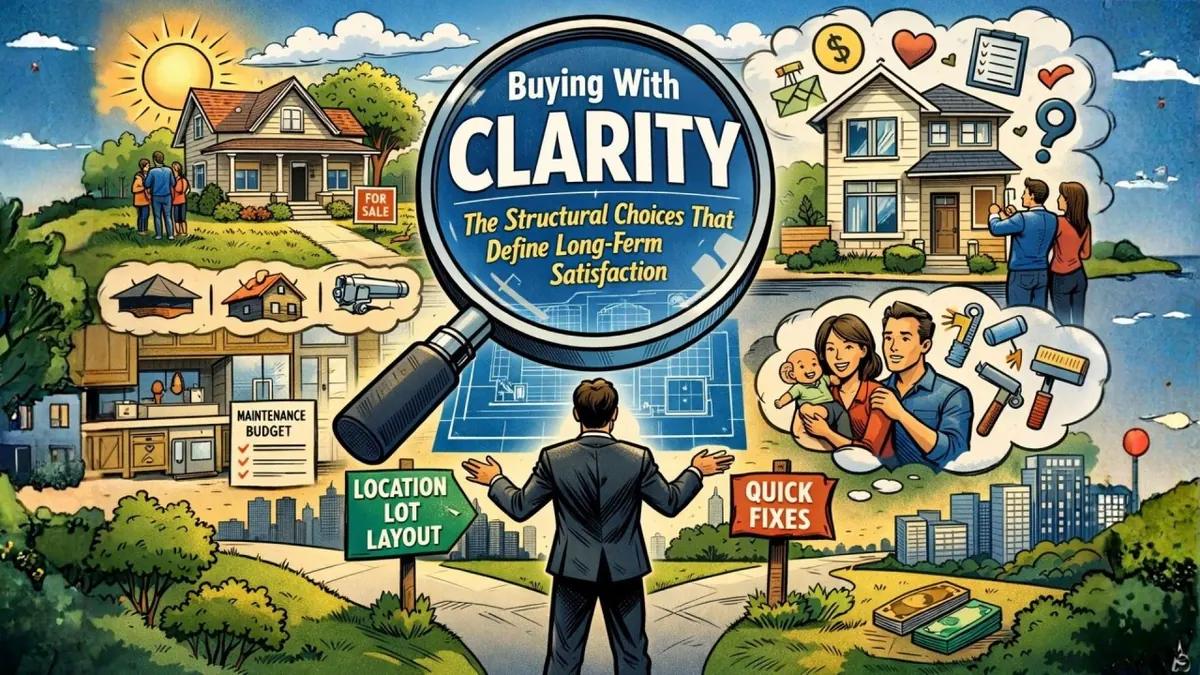
Real Estate Rewards Clarity
The buyers who tend to be most satisfied are not those who perfectly predict the market.
They are the ones who:
Understand their objectives
Define their affordability clearly
Focus on long-term suitability
Act decisively when the right opportunity appears
In every market cycle, buyers wrestle with the same question: “Should I act now, or wait for something better?”
The truth is that both action and inaction carry risk. The goal is not to eliminate uncertainty. The goal is to make a thoughtful decision based on fundamentals, affordability, and long-term needs.
Because in real estate, the most expensive mistake is often not buying too soon. It is remaining in indecision for too long.