How Informed Buyers Think: A Better Framework for Navigating the GTA Market

If there is one pattern I’ve seen consistently across hundreds of buyer conversations in the GTA, it’s this:
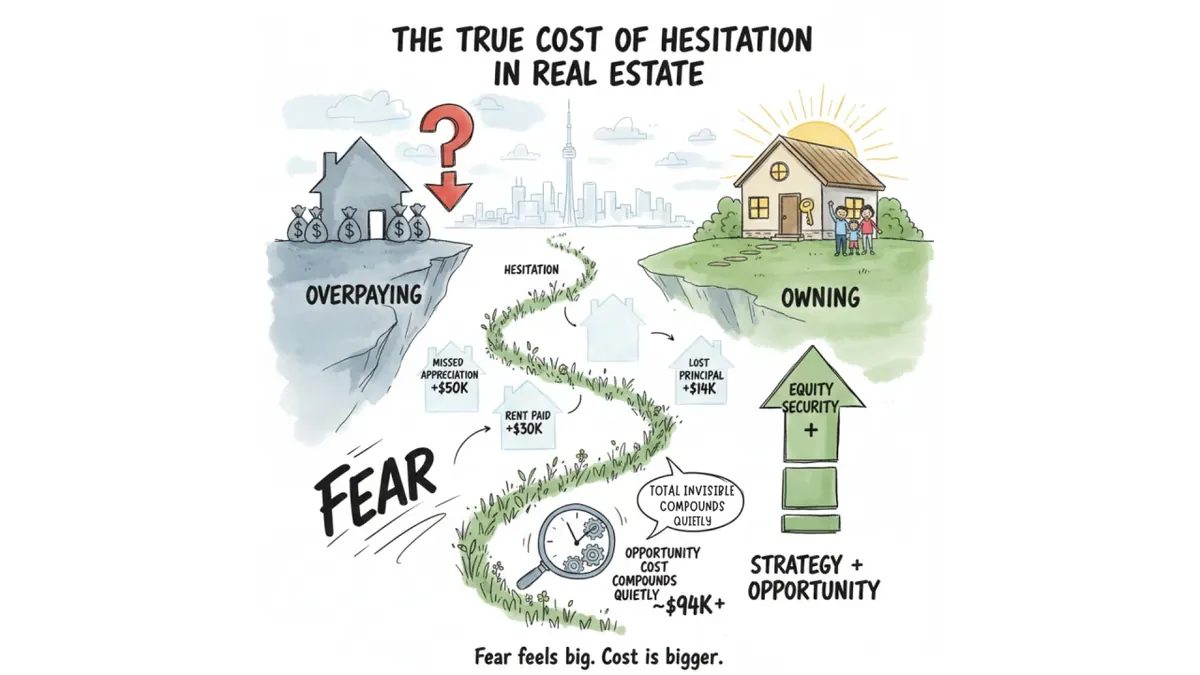
Buyers fear overpaying far more than they fear missing out — but in real estate, hesitation often carries the bigger price tag.
We talk about comparables, interest rates, negotiation strategy, and timing. But what buyers rarely consider is opportunity cost — the quiet, accumulating cost of waiting.
Let’s break this down clearly and practically.
1. The Psychology Trap: Overpaying Feels Immediate, Missing Out Feels Invisible
Overpaying feels like a visible mistake — you see the number, you react emotionally.
Missing out feels harmless because:
there's no statement showing the principal you didn’t build,
no alert showing the appreciation you missed,
no report showing how many buyers re-entered the market before you,
and no reminder that rent continues with zero return.
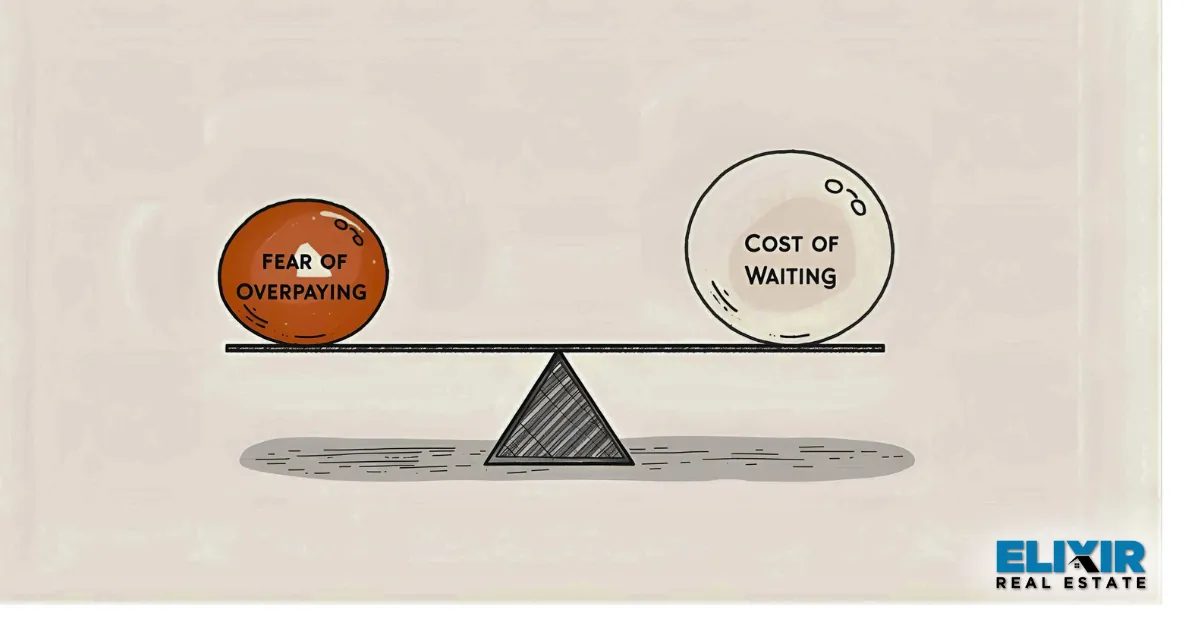
But the math is unmistakable: opportunity cost compounds quietly.
2. A Real GTA Example: The Silent Cost of Hesitation
Case Study: Oakville Townhouse (2024–2025)
A client recently hesitated on a well-priced condo townhouse listed at $815K in a balanced Oakville market. There was room for negotiation, and the home had strong value: two full upper bathrooms, a desirable layout, and a well-kept early-2000s build in a sought-after Oakville location.
Still, the buyers decided to “wait for a drop.” The home sold the following week for the rational pricing and inherent value.
Twelve months later, comparable townhomes in the same pocket were selling between $850K–$885K. Interest rates had eased during the year causing the price escalation and sentiments improved, and the clients continued renting their current condo unit at $2,500/month — money that built no equity.
Loss from waiting:
✔ $50K–$70K in price appreciation ✔ $30K in rent paid over the year ✔ $14K in principal repayment they would have built as homeowners (based on a typical 4.5% borrowing rate)
Total invisible cost:~$94K+
And this happened while they were hoping the market might further drop $25K–$50K.
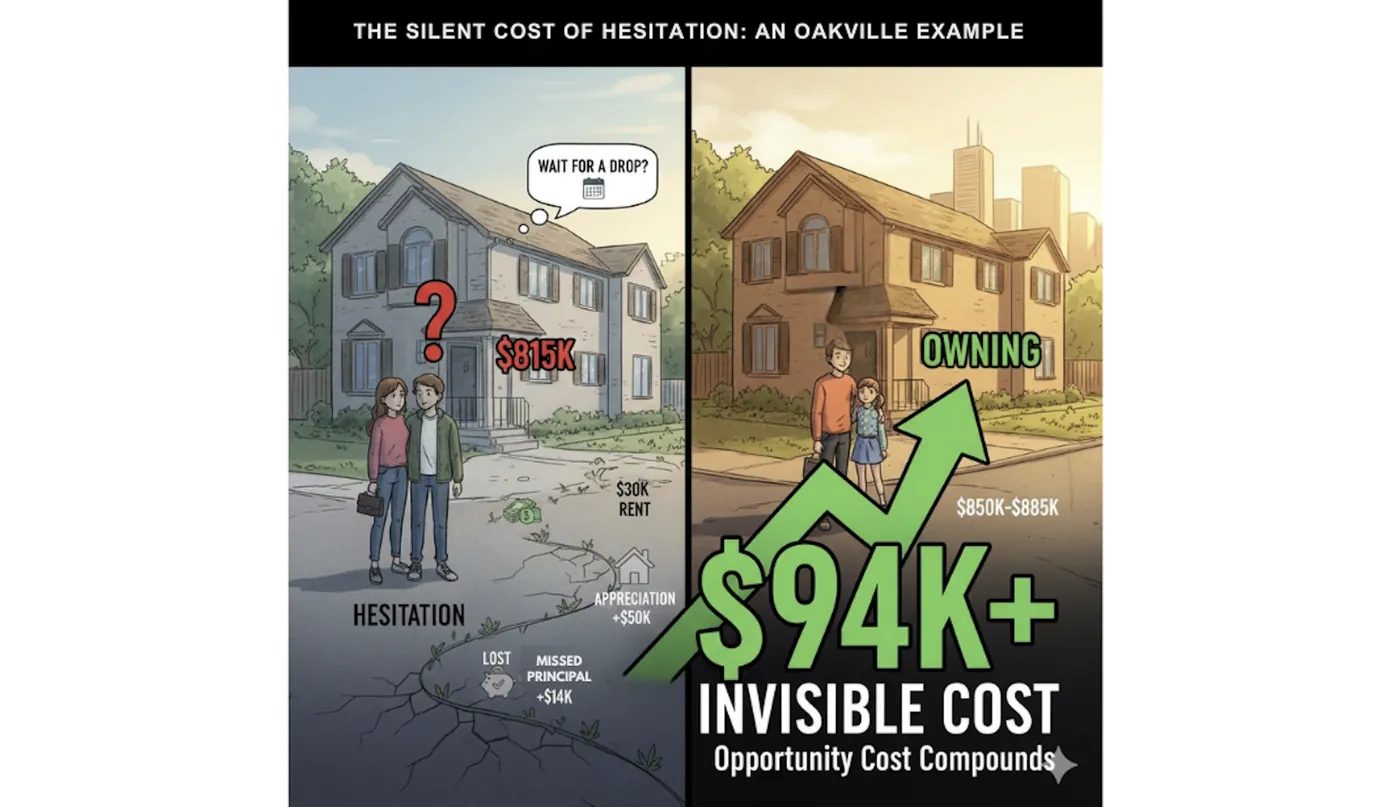
This scenario repeats itself across the GTA every single year — not because buyers make bad decisions, but because timing the market feels safer than acting before everyone else does.
3. Markets Don’t Move on Logic — They Move on Momentum
Buyers think the market works like this:
“Prices go down → I buy → Prices go up → I win.”
But real estate behaves differently. When sentiment improves, it improves fast. When confidence returns, it returns in clusters. When inventory tightens, it tightens everywhere at once.
By the time buyers feel “comfortable,” the time opportunity window is gone.
Hesitation becomes the most expensive decision.
4. Paying in a Slow Market ≠ Taking a Risk
In GTA real estate, taking action in a slow or quiet market is often nothing more than:
✔ securing a property at true market value before momentum returns, ✔ being a month early instead of a month late, ✔ or recognizing value before the broader market catches up.
Many buyers hesitate in slower markets because they’re hoping for “one more price drop.” But when someone decides to move forward — even while the crowd stays on the sidelines — they often enter the market months before the next price shift.
And historically, those early movers consistently end up in a stronger position than those who wait for the “perfect moment.”
Real estate rewards participation, not perfection.
5. The Right Question Isn’t “Will I Overpay?”
Most buyers ask: “What if I pay slightly more than I should?”
A better, more financially intelligent question is: “What is the cost of not owning this home over the next 12 months?”
Because even using conservative GTA numbers, the total cost of waiting just one year — through missed appreciation, rent paid, and lost principal repayment — often ends up being three to five times higher than any premium buyers worry about paying today.
That is the math most buyers never see.
6. A Practical Decision Framework for Today’s Buyers to decide with Confidence
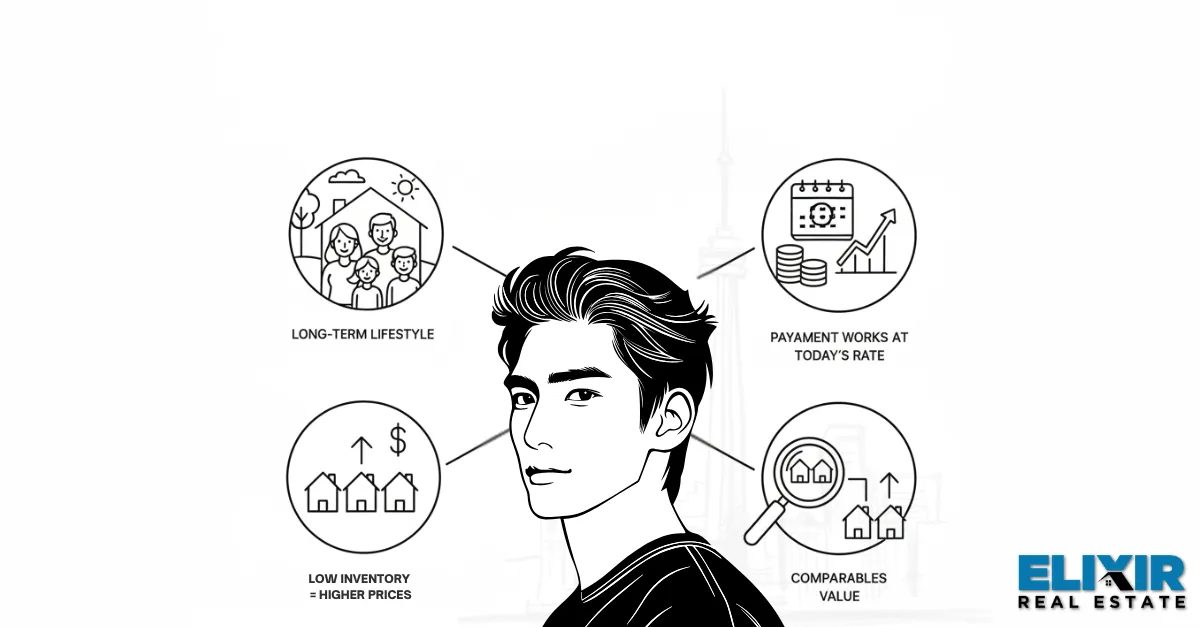
✔ If the home fits your long-term lifestyle, it’s already valuable. Move for life goals, not short-term fluctuations. Real estate is a long-term investment, and should never be a six-month entry-exit scheme.
✔ If the payment works at today’s rate, future rate drops are simply a bonus.
✔ If inventory is low in our segment, delays usually push prices higher.
✔ If comparables support the value and you are able to negotiate well, you’re paying market price with a markdown — not overpaying.
7. Confidence Comes from Clarity, Not Perfect Timing
The fear of overpaying is emotional. The cost of waiting is mathematical.
One feels big. The other is quietly much bigger.
A smarter approach for GTA buyers is to understand the true economics of timing — not chase perfection. With clarity and proper guidance, the market becomes less about fear and more about strategy and opportunity.
If you’d like to discuss where today’s real opportunities are — and how to navigate this shifting market intelligently — I’m here to help.