
Lot Shapes: The Silent Variable Behind a Comfortable Home

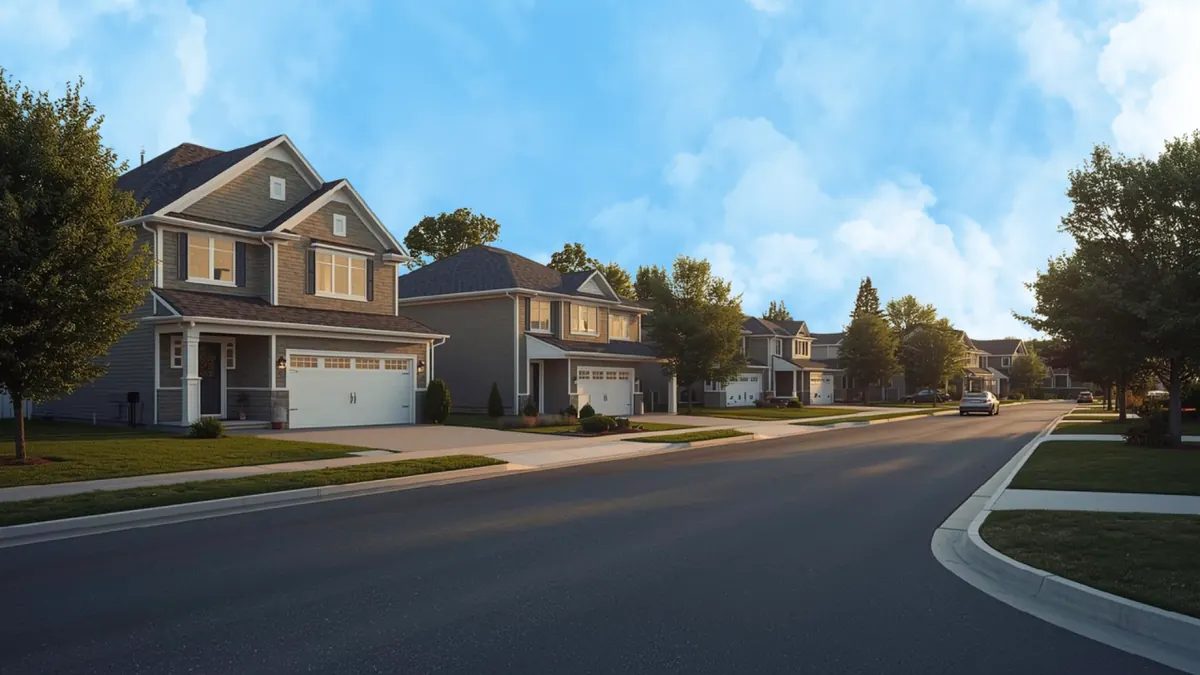
Continuing our discussion from the last piece I wrote on Lot Outlook, lets discuss another highly overlooked factor when you purchase Residential Real Estate - The Lot Shape.
It rarely grabs attention in a hot market, as everything sells and buyers overlook any downsides. But over time it quietly shapes daily livability, flexibility, and resale outcomes, especially when markets become more balanced and buyers have a variety options to choose.
Why Lot Shape Matters More Than Most People Realize
When purchasing freehold real estate, two land fundamentals quietly drive outcomes:
Lot outlook — orientation, exposure, and surroundings
Lot shape — how usable, functional, and conventional the land actually is
Lot shape influences:
How comfortably a home functions day to day
Usable outdoor space for families and entertaining
Privacy and spacing from neighbours
Renovation and expansion potential
And ultimately, resale demand and liquidity
In short, it affects how a home lives today and how it performs tomorrow.
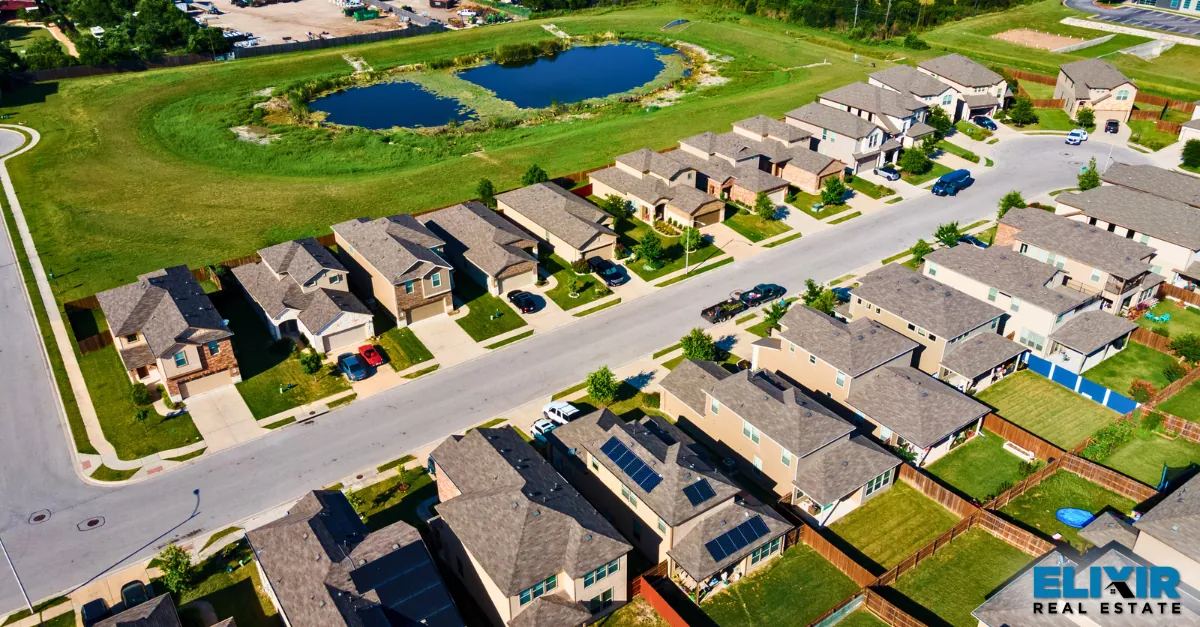
1. Regular (Rectangular) Lots: The Benchmark for Livability and Stability
Rectangular or square lots remain the gold standard in residential real estate.
Why?
Efficient, predictable use of space
Balanced front and rear yards
Minimal wasted side areas
Privacy from three sides
Broad and consistent buyer appeal
For homeowners, these lots feel intuitive and easy to live in. For resale, they remain the easiest to position because they align with what most buyers expect.
In real estate, conformity is often a strength. As a home buyer, it is generally wise to avoid properties that are outliers or deviate too far from established norms. Features that appear overly unique or unconventional may limit buyer appeal in the future, making resale more challenging. Aligning with market conventions typically supports smoother transactions and stronger resale outcomes when it comes time to divest the asset.
2. Pie-Shaped Lots: Backyard-Rich, Frontage-Constrained
Pie-shaped lots — commonly found on courts or cul-de-sacs — widen significantly at the rear while narrowing at the front.
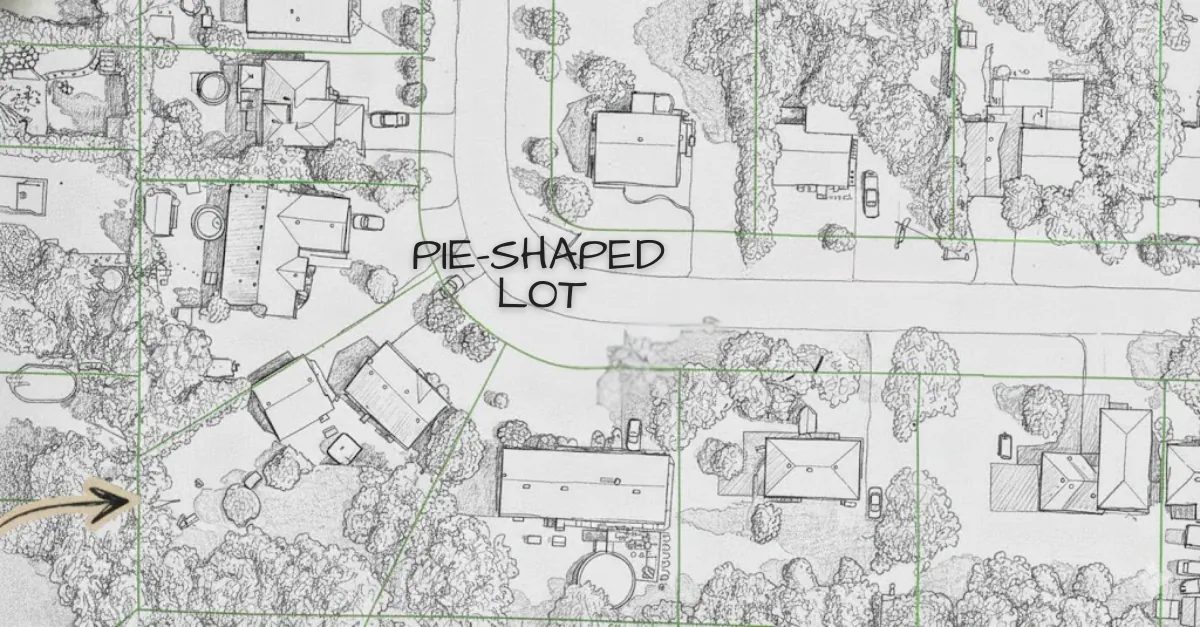
The upside:
Large, versatile backyards
Space for play areas, gardens, or outdoor features
Strong appeal for families prioritizing outdoor living
The trade-off:
Narrow frontage can reduce curb appeal
Front elevation may feel constrained
Driveway and parking can feel tight
A key principle many buyers overlook:
Frontage matters more than depth.
A wider 40 ft × 100 ft lot will often outperform a narrower 30 ft × 140 ft lot in long-term demand—even when the total land area is similar. This is because a home’s elevation, presence, and overall curb appeal are driven primarily by its frontage, which plays a critical role in first impressions, architectural balance, and resale appeal.
Extending this thinking to pie-shaped lots, frontage remains the deciding factor. For example, a lot with 40 ft of frontage widening to 95 ft at the rear is generally well-balanced. It offers strong street presence while still delivering a generous and functional backyard—an attractive combination for both end-users and future buyers.
By contrast, a pie-shaped lot with only 28 ft of frontage widening to 60 ft at the rear is far less compelling. Despite the pie shape, the excessively narrow frontage compromises elevation, driveway usability, and curb appeal, making the lot feel skewed and limiting its long-term desirability.
3. Reverse Pie-Shaped Lots: Strong First Impression, Limited Function
Reverse pie-shaped lots flip the typical equation:
Wide frontage
Narrow, often skewed rear yard
These lots often photograph well and feel impressive from the curb. However, the restricted backyard can meaningfully limit overall functionality and long-term appeal, particularly when the rear width becomes too compressed.

Common trade-offs include:
Reduced outdoor usability
Compromised family functionality
Lower resale appeal due to the skewed rear shape
Greater pricing sensitivity when compared against more balanced lots
Reduced appeal among some South Asian and East Asian buyers influenced by Vastu or Feng Shui–based preferences
That said, not all reverse pie-shaped lots should be viewed the same way.
Proportion matters. For example, a lot with a 65 ft frontage and a 55 ft rear width can still function well and remain marketable. However, when that same frontage tapers down to a 30 ft rear width, backyard usability and overall appeal become severely constrained.
Over time, reverse pie-shaped lots tend to attract a narrower buyer pool compared to more balanced lot shapes within the same neighbourhood — a factor that becomes especially relevant in balanced or slower markets.
4. Irregular Lots: Where Complexity Affects Comfort and Demand
Irregular lots — with uneven edges and disproportionate dimensions — introduce complexity that many buyers underestimate.
Common challenges include:
Difficult renovation or expansion planning
Inefficient use of space
Lower buyer confidence
Smaller resale audience
They can work in specific situations, but for most homeowners, irregular lots introduce compromises that show up both in daily living and at resale.
5. Triangular Lots: Rare, Unconventional, and Highly Niche
Triangular lots are uncommon and highly unconventional.
While some may offer wide frontage, they often suffer from:
Restricted build envelopes
Awkward layouts
Limited functional outdoor space
These lots appeal to a very narrow buyer profile and typically require pricing adjustments in balanced or slower markets. Higher pricing sensitivity is needed to deal with such lots.
6. Flag Lots: Value on Paper, Trade-Offs in Practice
Flag lots — where a home is set back behind another property and accessed via a long, narrow driveway — are found in several GTA neighbourhoods.
Potential advantages include:
More attractive pricing relative to conventional lots
Greater separation from the street, which some buyers value
However, there are meaningful trade-offs to consider:
Reduced privacy along the shared or extended access driveway
Additional snow removal and maintenance responsibilities
Perceived access limitations for visitors, deliveries, and services
A narrower buyer pool at resale
Flag lots can work well for the right homeowner, but they often exchange price advantage for reduced liquidity — a trade-off that buyers should understand clearly before committing.
7. Wide but Shallow Lots: An Underrated Advantage
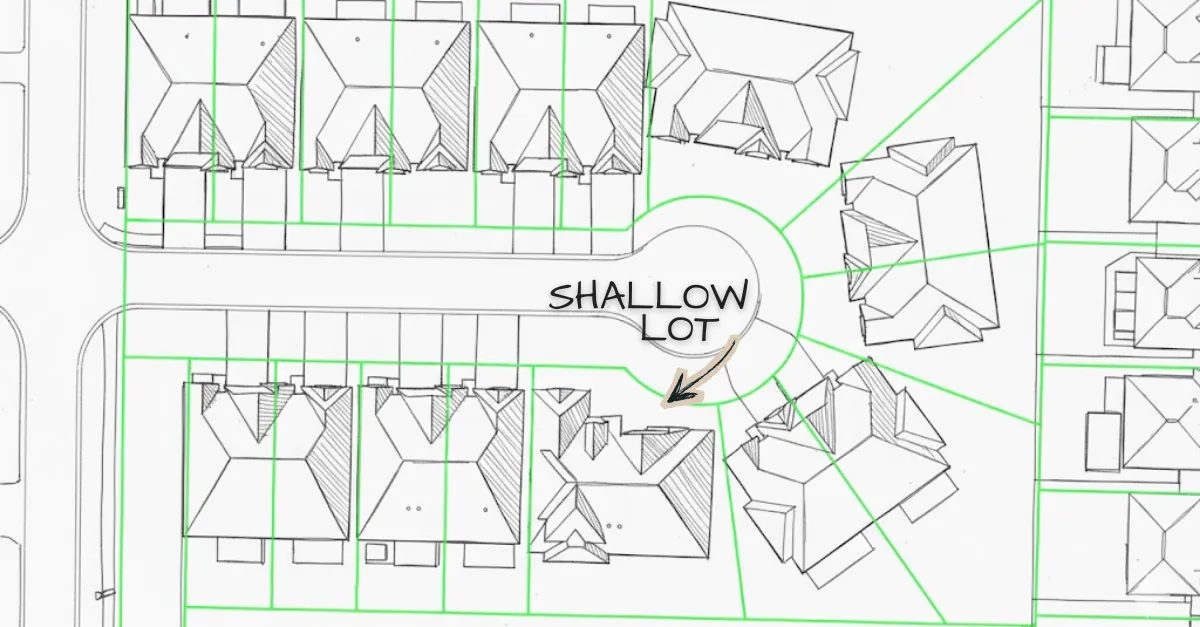
Extra-wide, shallower lots are often overlooked, yet they can offer meaningful advantages over deeper but narrower parcels.
Key benefits include:
Stronger curb appeal due to wider frontage
More efficient and flexible interior layouts
Easier planning for additions and renovations
Excellent suitability for bungalow conversions or higher-end rebuilds
For example, a 60 ft × 85 ft lot will often outperform a 40 ft × 120 ft lot in terms of livability and resale appeal, even though both have similar overall land area. Once a property achieves sufficient backyard depth for practical use, additional width tends to create more value than extra depth.
This is a nuance many buyers tend to underestimate — one that becomes increasingly evident over time. As of 2026, most double-garage detached homes in newer subdivisions are built on lots with approximately 38 ft of frontage. While efficient, this reduced width often limits architectural flexibility, particularly when it comes to creating a generously proportioned living or dining area with meaningful front-facing window exposure. In practice, a truly comfortable, well-balanced living and dining layout with a wide front window is far more achievable on 45 ft or wider lots. The additional frontage allows for a more breathable interior, better sightlines, and enhanced natural light — a premium in our climate. This is precisely why wider lots consistently offer superior interior layout possibilities and long-term livability.
The Bigger Insight Most Buyers Miss
In strong markets, almost any home will sell. In balanced or shifting markets — as we saw between 2023 and 2025 — conventional homes on conventional lots consistently outperform.
Lot shapes that align with:
The surrounding community
Neighbouring parcels
Typical buyer expectations
These are the ones which tend to retain stronger demand, better liquidity, and greater pricing resilience than outliers.
This isn’t just about maximizing returns. It’s about preserving choice and flexibility — whether you decide to move in five years, fifteen years, or simply want the confidence that your home will remain broadly appealing when the time comes.
Lot shape rarely makes headlines. It doesn’t command attention on listing sheets, and it’s seldom discussed at open houses.
Yet it quietly determines how comfortably a home lives — and how confidently it sells. Often, the difference isn’t visible on paper. It’s felt from the curb, long before the front door opens. It is evident in the rear yard space and how it balances the property itself.
In real estate, the most enduring decisions are often made before emotion enters the picture — at the land level.
If you’d like a thoughtful conversation about how lot fundamentals influence livability today and resale strength tomorrow, I’m always happy to connect.