
Bigger Home, Smaller Wealth: The First-Time Buyer Fallacy

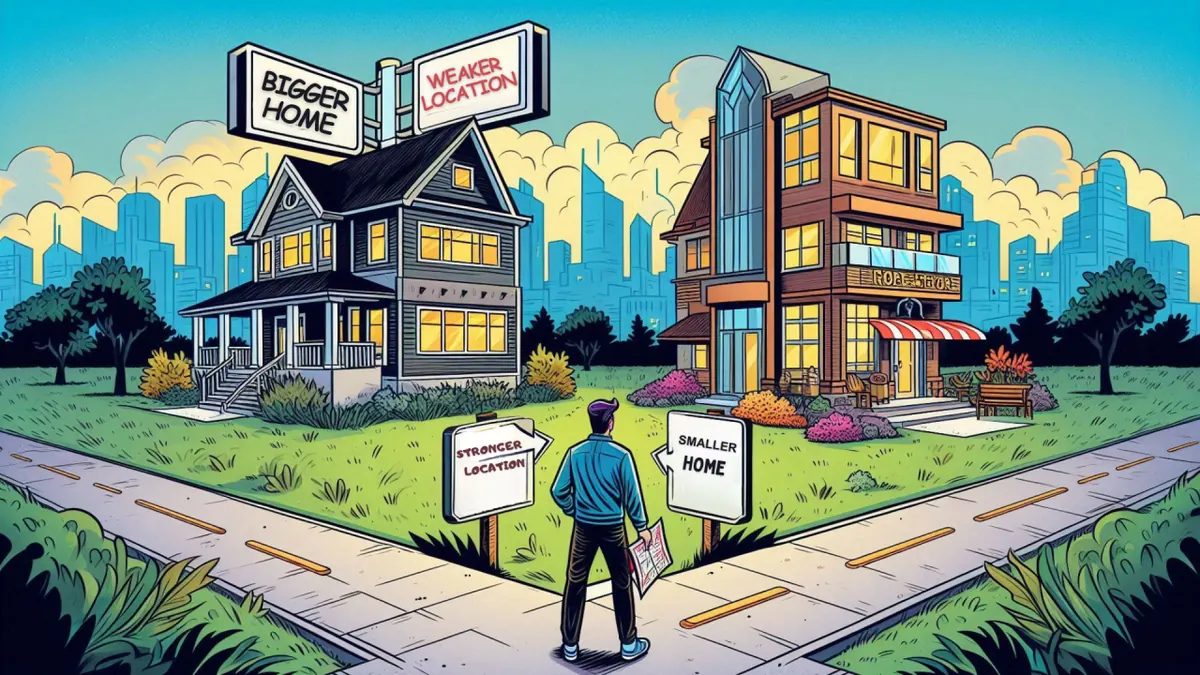
📍 Ask any first-time buyer in the GTA what matters most, and the answer is almost always the same: “What can I afford?”
That’s a fair starting point. Affordability defines your boundaries. But here’s the problem: many buyers stop there — and let affordability push them into the wrong type of compromise.
Instead of choosing a smaller or older home in a stronger location, they stretch for a bigger, shinier home in a weaker location. On day one, it feels like a win — more space, more bedrooms, fewer renovation needs. But 10 years later, the long-term wealth picture often tells a very different story.
The First-Time Buyer Bias: Why Location Gets Ignored
There are three psychological forces at play:
Anchoring Bias Bigger feels better. When you’re upgrading from renting, the jump from a one-bedroom condo to a three-bedroom detached looks like “real value.” The visual upgrade overrides long-term financial logic.
The Newness Effect Shiny kitchens, newer appliances, and modern finishes feel safer. First-time buyers often prefer newer builds in less central areas over older homes in established locations, because maintenance feels scary.
The Commute Discount In the excitement of ownership, buyers underestimate the lifestyle cost of longer commutes. A 20–30 minute difference seems small on paper, but cumulative over years it takes away quality of life and reduces the pool of future buyers who want that property for the same reason.

Together, these biases skew decisions toward house size today instead of location demand tomorrow.
Location Drives Resilience and Growth
Looking back at TRREB data over multiple market cycles, the trend is consistent:
Homes near transit hubs (GO lines, TTC subway, LRT expansions) appreciate faster and hold value better, even when the wider market slows.
Neighbourhoods anchored by top school zones consistently outperform, because the demand base is permanent and self-renewing.
Walkable, amenity-rich communities command higher resale liquidity — they simply attract more buyers at any given time.
By contrast, neighbourhoods with weaker fundamentals often take the sharpest hits during downturns. A bigger home may cost less per square foot, but appreciation per square foot also lags.
The Long-Term Wealth Gap:
Consider two first-time buyers in today’s $750K range:
Buyer A: 3-bed detached in a remote community, 95 minutes from Toronto core.
Buyer B: 3-bed townhouse in Markham or Richmond Hill, 15 minutes from GO or major highway.
Fast forward 10 years:
Buyer A sees modest growth — their home rises from $750K to $900K.
Buyer B rides stronger location demand — their townhouse rises from $750K to $1.1M.
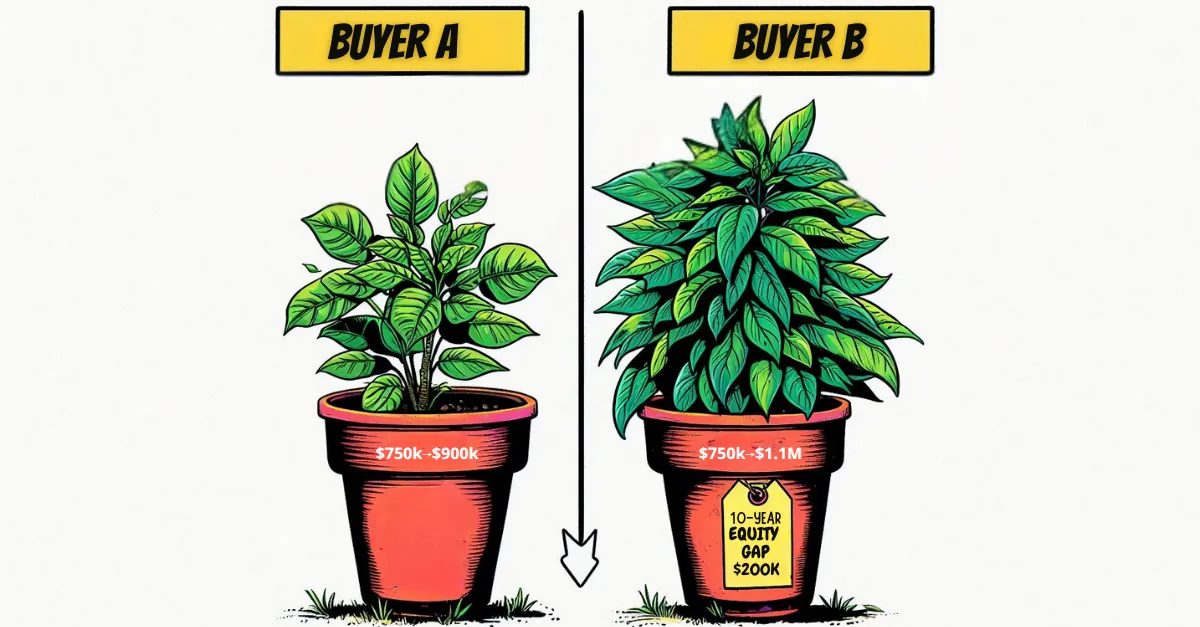
That’s a $200K equity gap.
And here’s the kicker: Buyer B’s property is also more attractive to renters, giving them the option to hold and leverage into a second purchase. And to top that quality of tenant applications received is better for Buyer B than Buyer A due to location - "Convenience and amenity rich in-demand location attracts better tenants". Buyer A though did well — their equity growth is relatively slower, and demand is thinner for making it a income property.
Why It Matters More for First-Time Buyers

For established homeowners, a location mistake can be absorbed by years of equity buildup. But for first-timers, your first purchase sets the trajectory of your entire wealth-building journey.
Choose wrong, and you might lose your upgrade window or stay “stuck” in a property that appreciates slowly.
Choose right location, and your first home becomes the springboard that funds your next move-up purchase or investment.
This is why your first decision isn’t about buying your “forever home.” It’s about buying your first asset for leverage.
How First-Time Buyers Can Get Location Right
✔️ Shift your definition of value. Stop thinking in square footage. Start thinking in terms of location merit and appreciation potential.
✔️ Map your lifestyle ecosystem. Look at transit access, schools, local business growth, and future city plans — along with the house specifics.
✔️ Plan with the next move in mind. Your first home isn’t the finish line. It’s step one in a ladder. The right location gives you the flexibility to live well and build equity at the same time.
✔️ Consult data, not just emotions. Study recent appreciation patterns by neighbourhood — go micro level and not just city-wide averages.
Key Takeaway
🔗 In my earlier article, I broke down our collective “location fixation” and why some buyers overestimate certain factors while underestimating others. You can read that here: Why Location Often Wins — But Isn’t Always the Right Answer.
For first-time buyers, the lesson is sharper:
👉 Your first home is not about maximum space or minimum reno. It’s about establishing yourself in the path of long-term demand.
Because location isn’t only important in real estate — it’s the force that compounds your wealth.
📩 You can reach me directly at mudit@ElixirRealEstate.ca or visit www.ElixirRealEstate.ca — and let’s align your next move with clarity and confidence.